TikTok emerged as a growing advertising channel during BFCM 2025. Among Triple Whale brands, its share of ad spend increased nearly 24% year over year, while the platform delivered a solid 2.26 return on ad spend (ROAS). Those results point to TikTok earning a bigger role in BFCM media plans.
This guide breaks down the TikTok ad benchmarks behind these results. We’ll also show how Triple Whale can help you apply those insights to your Black Friday TikTok ads in 2026.
BFCM 2025 TikTok Ad Performance
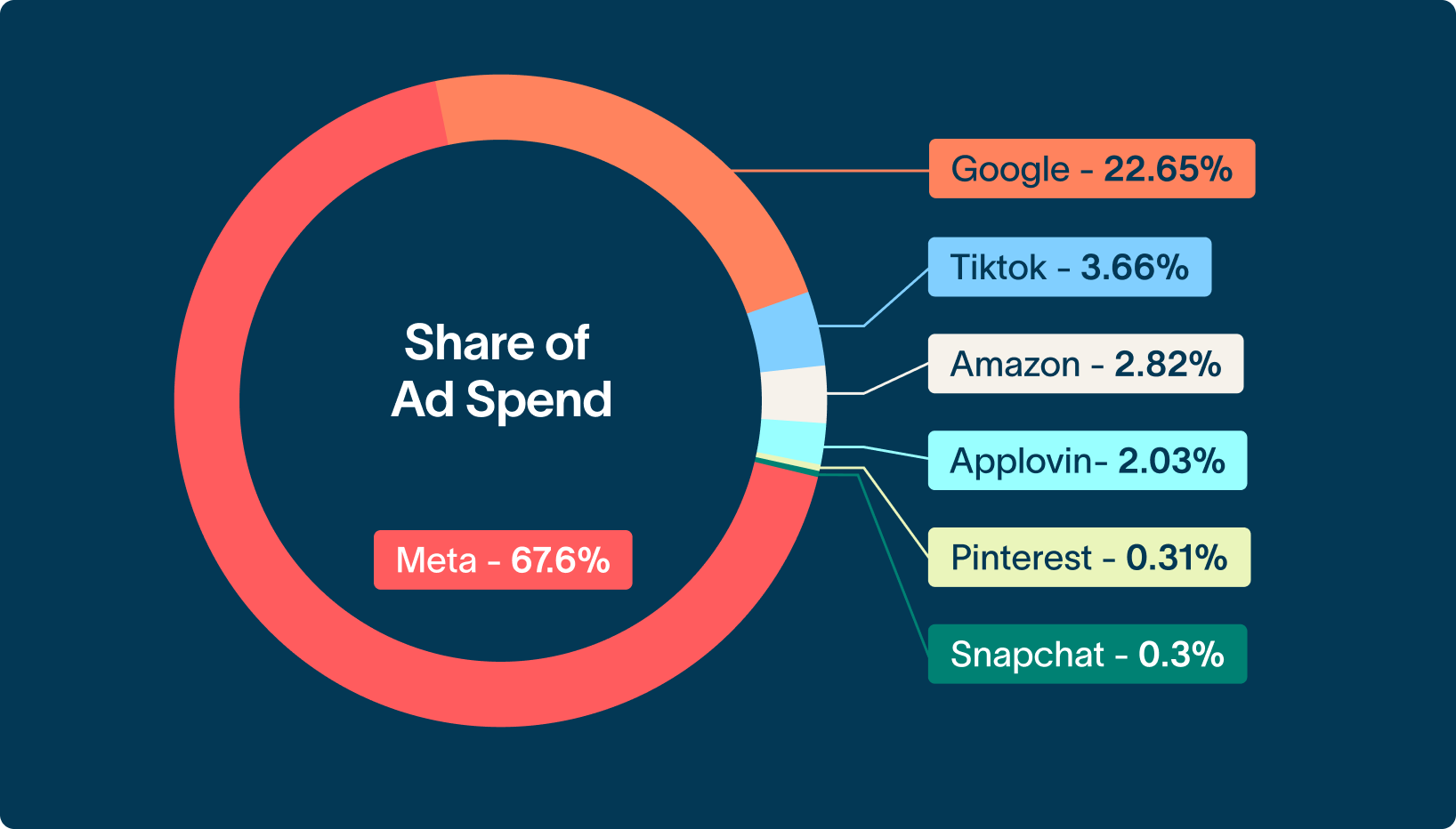
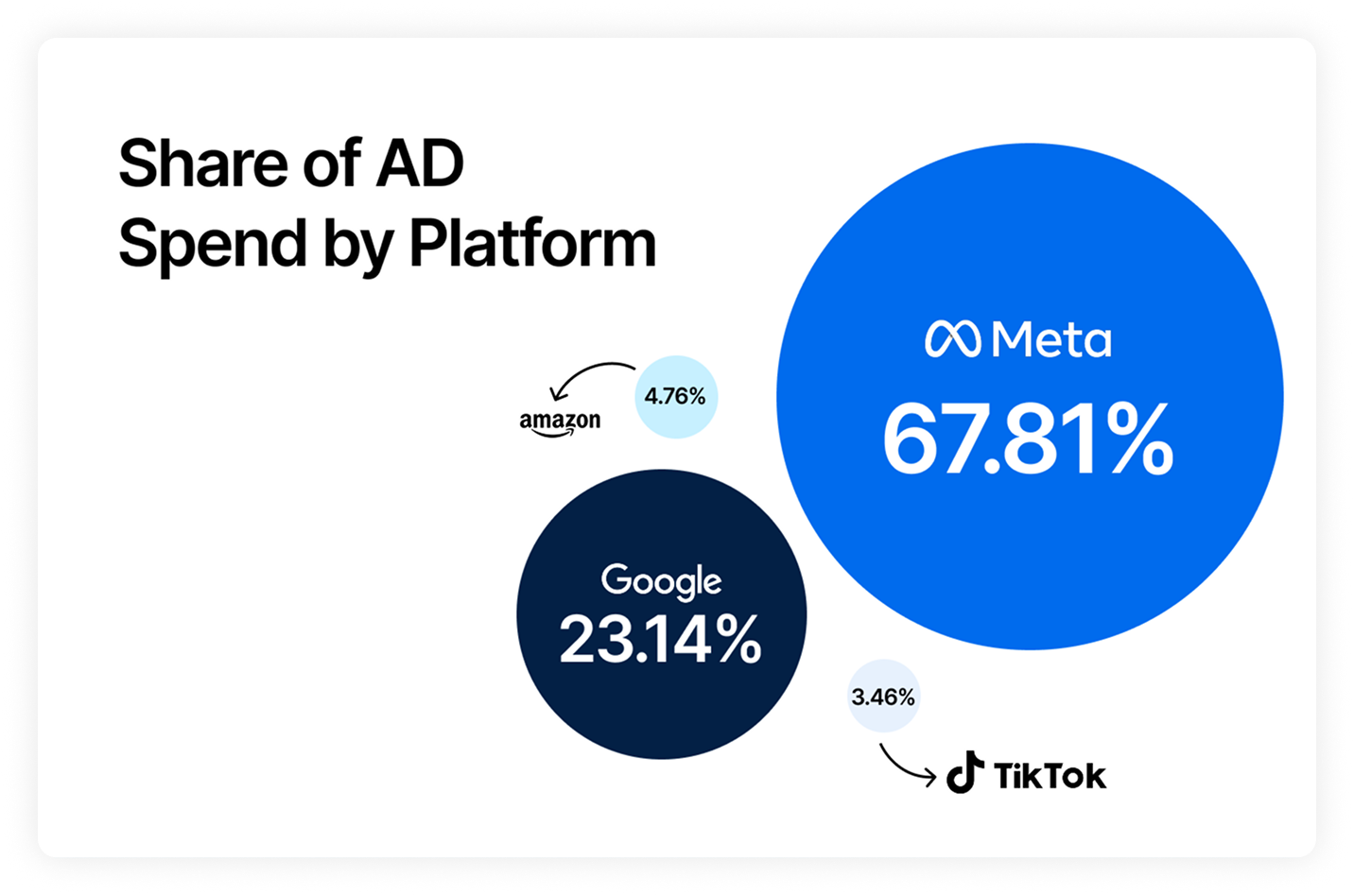
In our BFCM 2025 Retrospective Report, brands allocated 90.25% of their ad spend to Meta and Google Ads. However, some shops increased their investment in TikTok as the platform became a more meaningful ecommerce channel.
TikTok appears to be improving its ad engine, with all five of the key metrics in our report moving in a favorable direction for marketers and brand owners.
Metric
BFCM 2025
Year-over-Year Change
What Changed
Return on Ad Spend (ROAS)
2.26
+28.42%
TikTok generated more attributed revenue for each advertising dollar
Average Order Value (AOV)
$59.43
+12.15%
Orders attributed to TikTok carried a larger average basket
Cost Per Thousand Impressions (CPM)
$6.26
-27.50%
Advertisers paid less to reach TikTok users
Cost Per Acquisition (CPA)
$17.35
-29.01%
Customer acquisition became less expensive
Share of Ad Spend
3.66%
+23.65%
Advertisers devoted a larger portion of their media mix to TikTok
If Meta ads and Google ads are already working for your brand, moving budget to a smaller channel can feel risky. The 2025 results suggest TikTok deserves a controlled test, not a wholesale shift. Its improving efficiency gives brands a reason to test the platform while costs remain comparatively low.
The benefits of TikTok for brands
TikTok gives brands a direct line to highly engaged shoppers in an environment built around discovery, community, and entertainment. For ecommerce advertisers, that creates several ways to build trust and turn attention into purchases.
1. Millions of monthly users
TikTok is expected to reach 1.54 billion global users in 2026, with the average user spending over an hour and a half on the platform every day. According to TikTok’s research, 83% of users say they’ve discovered a new product on TikTok Shop and 70% have discovered a new brand.
That combination of reach and discovery matters during BFCM, when shoppers are comparing products, building wish lists, and looking for gift ideas before the weekend begins. Creator-led demonstrations, reviews, gift guides, and TikTok Shop offers can move a product from passive discovery to active consideration while keeping the path to checkout short.
2. Communities, communication, and established trust
TikTok’s community-driven format gives brands a direct way to listen, respond, and build trust at scale. Comments, creator reactions, and customer videos can turn product conversations into social proof, helping brands show how their products perform in real life and build credibility with potential buyers.
3. Frictionless shopping with TikTok Shop
Brands and creators can sell directly from the For You Page (FYP) through a suite of in-app shopping touchpoints. An integrated checkout directly within TikTok means that both discovery and purchase can happen in one place, which reduces friction in the buyer’s journey. By making a purchase without leaving the platform, a user can continue to enjoy their typical experience (scrolling, scrolling, scrolling) afterward, and everyone’s happy.
4. Brand and creator collaborations for authentic content
TikTok’s Branded Mission solution helps advertisers crowdsource content from creators and invite the community to participate in branded campaigns. This gives brands more platform-native creative while letting creators tell the story in a voice their audiences already trust.
5. Tap into cultural moments as they happen
TikTok is where trends, conversations, and new forms of storytelling often gain momentum. Brands that participate in a way that feels relevant to the platform can build visibility, show personality, and connect their products to topics shoppers already care about without forcing their way into the conversation.
How Triple Whale customers used TikTok ads for BFCM 2025
As the table above shows, TikTok’s efficiency improved across every metric. Its 2.26 ROAS matched Meta’s, even though Meta improved just 3.18% year over year, while Google Ads delivered a higher 3.62 return that was down 21.09% from 2024.
Acquisition costs followed the same pattern. TikTok’s cost per acquisition declined while Meta’s increased 2.19% and Google’s increased 34.18%. TikTok still represented a smaller share of total ad spend, but it became cheaper to acquire customers there as acquisition costs rose on the two largest platforms.
That does not make TikTok a replacement for Meta or Google. It does show that the platform is moving beyond top-of-funnel discovery and becoming a more credible direct-response channel for ecommerce brands.
What that means for BFCM 2026
TikTok stands out as a leading option for brands looking to diversify their social ad spend at a lower cost. The goal isn’t to move budget blindly. It’s to give TikTok a defined role, test before competition peaks, and measure how the platform contributes across the customer journey.
1. Treat TikTok as a controlled diversification opportunity
Pair each creative test with a relevant landing page, a clear offer, and a consistent attribution window. Increase investment when TikTok adds efficient reach or conversions without weakening blended performance
2. Treat November as a month-long campaign
Pre-BFCM ad spend reached 65% of the official weekend’s spend in 2025. Use October through November 19 to build demand around hero products, then preview the offer mechanics from November 21–26 so shoppers know what to expect before Black Friday
3. Test meaningful creative differences before costs rise
Build concepts around a new persona, problem, mechanism, emotion, or visual format instead of making minor cosmetic changes. Use those early tests to identify the TikTok hooks and creator styles worth scaling during BFCM
4. Monitor performance throughout the day
Track pacing by campaign, product, offer, margin, new customer cost, and checkout performance. Reallocate budget when marginal efficiency breaks, and separate Black Friday and Cyber Monday readouts so the message can shift from discovery to last-chance urgency
5. Measure TikTok beyond the click
Compare platform-reported results with first-party attribution that includes deterministic views. A post-purchase survey sent within 24 hours can also show whether shoppers first discovered the brand on TikTok, even when another channel received the final click
The 2026 opportunity is to arrive with tested creative, a clear offer, and measurement that reflects TikTok’s role in discovery as well as conversion. That gives teams enough evidence to scale what works without treating the platform as either a side bet or a guaranteed replacement for established channels.
Industry trends on TikTok during BFCM 2025
Plenty of products have gone viral on TikTok and generated a “TikTok Made Me Buy It” moment. But some products are better suited to advertise on the platform than others!
As part of the BFCM 2025 Retrospective Report, Triple Whale’s team investigated which industries spent the most on TikTok and how they compared to Meta and Google:
Category
TikTok
Meta
Google
Apparel & Accessories
31.84%
28.82%
28.63%
Beauty
39.99%
27.58%
20.19%
Home & Garden
6.71%
10.15%
12.93%
Food & Beverage
4.22%
4.17%
3.37%
Sports & Outdoors
1.70%
5.38%
5.19%
Toys, Art, & Collectibles
2.01%
4.54%
4.44%
Health & Wellness
0.61%
2.14%
2.33%
Pets & Animals
1.51%
2.96%
3.22%
Electronics
2.36%
3.18%
7.13%
Baby
1.10%
1.09%
1.47%
Lifestyle & Boutique
0.59%
1.04%
1.14%
Automotive
0.84%
1.01%
1.14%
Books & Music
0.91%
1.09%
0.54%
Media & Publishing
0.26%
0.43%
0.54%
Travel & Luggage
4.05%
3.79%
4.15%
How Triple Whale helps advertisers on TikTok
Triple Whale helps advertisers see how TikTok contributes across the customer journey, strengthen the data sent back to the platform, and use first-party customer data to make better targeting and budget decisions. Here’s a look at how those pieces work together.
Measure conversions that happen after a view
Clicks and Deterministic Views attribution combines first-party click data with TikTok’s deterministic view signals and distributes credit across the customer journey. On a video-first platform, this helps capture influence when an ad contributes to a purchase without generating an immediate click.
Give TikTok stronger first-party conversion signals
Sonar Optimize enriches site and ecommerce events and sends them to TikTok through the Events API, giving the platform more complete server-side conversion data. That broader event coverage can reduce signal gaps and provide a stronger foundation for reporting, targeting, and campaign optimization.
Turn first-party customer data into TikTok audiences
Advertisers can sync Triple Whale customer segments to TikTok as Custom Audiences for targeting or exclusions and create linked 1%–10% Lookalike Audiences from the same workflow. Common uses include excluding recent purchasers, retargeting cart abandoners, building lookalikes from high-value repeat customers, and re-engaging lapsed customers.
Move from reporting to action
Advertisers can review first-party attribution alongside TikTok-reported performance, ask Moby AI for analysis or budget recommendations, and adjust individual TikTok campaign budgets from Triple Whale. These remain advertiser-controlled actions rather than fully autonomous TikTok management.
Turn insights into action
TikTok’s BFCM 2025 results made a stronger case for the platform as both a discovery channel and a source of direct sales. For 2026, the brands best positioned to benefit will test early, build creative for the way people use TikTok, and measure the platform beyond the last click.
Ready to build a clearer BFCM 2026 strategy? Book a demo to see how Triple Whale can help you measure TikTok’s full-funnel impact and turn performance data into better budget decisions.
Black Friday TikTok Ads: FAQs
How does TikTok Shop reduce friction in the buying process?
TikTok Shop allows brands and creators to sell directly from the For You Page with an integrated in-app checkout, so product discovery and purchase happen in one place without the user ever leaving the platform.
Which industries saw the most TikTok ad investment during BFCM 2025?
According to Triple Whale's BFCM 2025 Retrospective Report, the top industries investing in TikTok ads were Health & Beauty, Apparel & Accessories, and Home & Garden.
Why should brands consider adding TikTok to their BFCM ad strategy?
TikTok combines a massive, highly engaged user base with improved ad efficiency and the direct sales potential of TikTok Shop, making it a strong complement to traditional platforms for brands looking to diversify their holiday ad spend.
Component Sales
5.32K
Benchmark your ecommerce brand against industry leaders
TikTok emerged as a growing advertising channel during BFCM 2025. Among Triple Whale brands, its share of ad spend increased nearly 24% year over year, while the platform delivered a solid 2.26 return on ad spend (ROAS). Those results point to TikTok earning a bigger role in BFCM media plans.
This guide breaks down the TikTok ad benchmarks behind these results. We’ll also show how Triple Whale can help you apply those insights to your Black Friday TikTok ads in 2026.
BFCM 2025 TikTok Ad Performance
In our BFCM 2025 Retrospective Report, brands allocated 90.25% of their ad spend to Meta and Google Ads. However, some shops increased their investment in TikTok as the platform became a more meaningful ecommerce channel.
TikTok appears to be improving its ad engine, with all five of the key metrics in our report moving in a favorable direction for marketers and brand owners.
Metric
BFCM 2025
Year-over-Year Change
What Changed
Return on Ad Spend (ROAS)
2.26
+28.42%
TikTok generated more attributed revenue for each advertising dollar
Average Order Value (AOV)
$59.43
+12.15%
Orders attributed to TikTok carried a larger average basket
Cost Per Thousand Impressions (CPM)
$6.26
-27.50%
Advertisers paid less to reach TikTok users
Cost Per Acquisition (CPA)
$17.35
-29.01%
Customer acquisition became less expensive
Share of Ad Spend
3.66%
+23.65%
Advertisers devoted a larger portion of their media mix to TikTok
If Meta ads and Google ads are already working for your brand, moving budget to a smaller channel can feel risky. The 2025 results suggest TikTok deserves a controlled test, not a wholesale shift. Its improving efficiency gives brands a reason to test the platform while costs remain comparatively low.
The benefits of TikTok for brands
TikTok gives brands a direct line to highly engaged shoppers in an environment built around discovery, community, and entertainment. For ecommerce advertisers, that creates several ways to build trust and turn attention into purchases.
1. Millions of monthly users
TikTok is expected to reach 1.54 billion global users in 2026, with the average user spending over an hour and a half on the platform every day. According to TikTok’s research, 83% of users say they’ve discovered a new product on TikTok Shop and 70% have discovered a new brand.
That combination of reach and discovery matters during BFCM, when shoppers are comparing products, building wish lists, and looking for gift ideas before the weekend begins. Creator-led demonstrations, reviews, gift guides, and TikTok Shop offers can move a product from passive discovery to active consideration while keeping the path to checkout short.
2. Communities, communication, and established trust
TikTok’s community-driven format gives brands a direct way to listen, respond, and build trust at scale. Comments, creator reactions, and customer videos can turn product conversations into social proof, helping brands show how their products perform in real life and build credibility with potential buyers.
3. Frictionless shopping with TikTok Shop
Brands and creators can sell directly from the For You Page (FYP) through a suite of in-app shopping touchpoints. An integrated checkout directly within TikTok means that both discovery and purchase can happen in one place, which reduces friction in the buyer’s journey. By making a purchase without leaving the platform, a user can continue to enjoy their typical experience (scrolling, scrolling, scrolling) afterward, and everyone’s happy.
4. Brand and creator collaborations for authentic content
TikTok’s Branded Mission solution helps advertisers crowdsource content from creators and invite the community to participate in branded campaigns. This gives brands more platform-native creative while letting creators tell the story in a voice their audiences already trust.
5. Tap into cultural moments as they happen
TikTok is where trends, conversations, and new forms of storytelling often gain momentum. Brands that participate in a way that feels relevant to the platform can build visibility, show personality, and connect their products to topics shoppers already care about without forcing their way into the conversation.
How Triple Whale customers used TikTok ads for BFCM 2025
As the table above shows, TikTok’s efficiency improved across every metric. Its 2.26 ROAS matched Meta’s, even though Meta improved just 3.18% year over year, while Google Ads delivered a higher 3.62 return that was down 21.09% from 2024.
Acquisition costs followed the same pattern. TikTok’s cost per acquisition declined while Meta’s increased 2.19% and Google’s increased 34.18%. TikTok still represented a smaller share of total ad spend, but it became cheaper to acquire customers there as acquisition costs rose on the two largest platforms.
That does not make TikTok a replacement for Meta or Google. It does show that the platform is moving beyond top-of-funnel discovery and becoming a more credible direct-response channel for ecommerce brands.
What that means for BFCM 2026
TikTok stands out as a leading option for brands looking to diversify their social ad spend at a lower cost. The goal isn’t to move budget blindly. It’s to give TikTok a defined role, test before competition peaks, and measure how the platform contributes across the customer journey.
1. Treat TikTok as a controlled diversification opportunity
Pair each creative test with a relevant landing page, a clear offer, and a consistent attribution window. Increase investment when TikTok adds efficient reach or conversions without weakening blended performance
2. Treat November as a month-long campaign
Pre-BFCM ad spend reached 65% of the official weekend’s spend in 2025. Use October through November 19 to build demand around hero products, then preview the offer mechanics from November 21–26 so shoppers know what to expect before Black Friday
3. Test meaningful creative differences before costs rise
Build concepts around a new persona, problem, mechanism, emotion, or visual format instead of making minor cosmetic changes. Use those early tests to identify the TikTok hooks and creator styles worth scaling during BFCM
4. Monitor performance throughout the day
Track pacing by campaign, product, offer, margin, new customer cost, and checkout performance. Reallocate budget when marginal efficiency breaks, and separate Black Friday and Cyber Monday readouts so the message can shift from discovery to last-chance urgency
5. Measure TikTok beyond the click
Compare platform-reported results with first-party attribution that includes deterministic views. A post-purchase survey sent within 24 hours can also show whether shoppers first discovered the brand on TikTok, even when another channel received the final click
The 2026 opportunity is to arrive with tested creative, a clear offer, and measurement that reflects TikTok’s role in discovery as well as conversion. That gives teams enough evidence to scale what works without treating the platform as either a side bet or a guaranteed replacement for established channels.
Industry trends on TikTok during BFCM 2025
Plenty of products have gone viral on TikTok and generated a “TikTok Made Me Buy It” moment. But some products are better suited to advertise on the platform than others!
As part of the BFCM 2025 Retrospective Report, Triple Whale’s team investigated which industries spent the most on TikTok and how they compared to Meta and Google:
Category
TikTok
Meta
Google
Apparel & Accessories
31.84%
28.82%
28.63%
Beauty
39.99%
27.58%
20.19%
Home & Garden
6.71%
10.15%
12.93%
Food & Beverage
4.22%
4.17%
3.37%
Sports & Outdoors
1.70%
5.38%
5.19%
Toys, Art, & Collectibles
2.01%
4.54%
4.44%
Health & Wellness
0.61%
2.14%
2.33%
Pets & Animals
1.51%
2.96%
3.22%
Electronics
2.36%
3.18%
7.13%
Baby
1.10%
1.09%
1.47%
Lifestyle & Boutique
0.59%
1.04%
1.14%
Automotive
0.84%
1.01%
1.14%
Books & Music
0.91%
1.09%
0.54%
Media & Publishing
0.26%
0.43%
0.54%
Travel & Luggage
4.05%
3.79%
4.15%
How Triple Whale helps advertisers on TikTok
Triple Whale helps advertisers see how TikTok contributes across the customer journey, strengthen the data sent back to the platform, and use first-party customer data to make better targeting and budget decisions. Here’s a look at how those pieces work together.
Measure conversions that happen after a view
Clicks and Deterministic Views attribution combines first-party click data with TikTok’s deterministic view signals and distributes credit across the customer journey. On a video-first platform, this helps capture influence when an ad contributes to a purchase without generating an immediate click.
Give TikTok stronger first-party conversion signals
Sonar Optimize enriches site and ecommerce events and sends them to TikTok through the Events API, giving the platform more complete server-side conversion data. That broader event coverage can reduce signal gaps and provide a stronger foundation for reporting, targeting, and campaign optimization.
Turn first-party customer data into TikTok audiences
Advertisers can sync Triple Whale customer segments to TikTok as Custom Audiences for targeting or exclusions and create linked 1%–10% Lookalike Audiences from the same workflow. Common uses include excluding recent purchasers, retargeting cart abandoners, building lookalikes from high-value repeat customers, and re-engaging lapsed customers.
Move from reporting to action
Advertisers can review first-party attribution alongside TikTok-reported performance, ask Moby AI for analysis or budget recommendations, and adjust individual TikTok campaign budgets from Triple Whale. These remain advertiser-controlled actions rather than fully autonomous TikTok management.
Turn insights into action
TikTok’s BFCM 2025 results made a stronger case for the platform as both a discovery channel and a source of direct sales. For 2026, the brands best positioned to benefit will test early, build creative for the way people use TikTok, and measure the platform beyond the last click.
Ready to build a clearer BFCM 2026 strategy? Book a demo to see how Triple Whale can help you measure TikTok’s full-funnel impact and turn performance data into better budget decisions.
Black Friday TikTok Ads: FAQs
How does TikTok Shop reduce friction in the buying process?
TikTok Shop allows brands and creators to sell directly from the For You Page with an integrated in-app checkout, so product discovery and purchase happen in one place without the user ever leaving the platform.
Which industries saw the most TikTok ad investment during BFCM 2025?
According to Triple Whale's BFCM 2025 Retrospective Report, the top industries investing in TikTok ads were Health & Beauty, Apparel & Accessories, and Home & Garden.
Why should brands consider adding TikTok to their BFCM ad strategy?
TikTok combines a massive, highly engaged user base with improved ad efficiency and the direct sales potential of TikTok Shop, making it a strong complement to traditional platforms for brands looking to diversify their holiday ad spend.
Share
Emily Kordys
Emily is a Content Writer at Triple Whale, where she creates data-driven content for ecommerce marketers. She has spent nearly a decade in content marketing across the B2B SaaS and ecommerce industries, helping brands turn complex topics into engaging, actionable content.
Body Copy: The following benchmarks compare advertising metrics from April 1-17 to the previous period. Considering President Trump first unveiled his tariffs on April 2, the timing corresponds with potential changes in advertising behavior among ecommerce brands (though it isn’t necessarily correlated).


 Moby AIAsk questions, analyze performance, and work with your business context.
 ActionsTake governed action across the tools that run your business.
 AutomationsSchedule recurring analysis and work that runs on your terms.
 Landing PagesCreative conversion-focused ecommerce pages with Moby.
 Creative StudioGenerate and refine creative grounded in your brand.











.webp)

.webp)
