AI can give you an answer that looks right and still misses something important. Maybe it used the wrong revenue definition. Maybe it missed a campaign change from yesterday. That’s easy to shrug off when you’re brainstorming. It’s a much bigger problem when you’re moving budget or planning inventory.
AI models can reason, analyze, and create. But they don’t automatically understand an commerce business. They need access to its data, measurements, definitions, history, and tools.
An AI harness provides that connection. It surrounds a model with business data, definitions, memory, tools, workflows, and controls.
We’ll break down why this setup matters for commerce teams and show how Moby brings it to life using Triple Whale’s trusted foundation.
What is an AI harness?
An AI harness is the system that connects an AI model to the information and capabilities it needs to complete useful work.
Think of the model as an engine. The harness is the rest of the car. It includes steering, navigation, sensors, controls, and safety systems. A better engine helps. But the engine can’t get you where you need to go on its own.
An AI harness can bring together:
- Business data and definitions
- Memory and company knowledge
- Specialized tools and workflows
- Verification, permissions, and controls
Why the model alone isn’t enough
A general-purpose model may understand commerce concepts. But it doesn’t know how your company defines revenue. It doesn’t know which attribution model you trust, what changed today, how your data relates, or what you want it to do.
That’s fine when the stakes are low. You can ask a general model for headline ideas or a first draft of a brief. But the risk grows when you ask it to explain a drop in revenue or tell you where to move budget.
A confident answer isn’t the same as a correct answer. Without business context, even a strong model can only offer a polished guess.
Why this matters for commerce
Commerce questions span the whole business.
They can touch marketing, customers, products, site performance, inventory, lifecycle, and finance. Useful AI needs to know what the data means, how it connects, and what it signals.
Imagine your new customer acquisition cost (CAC) jumps this week. Paid media may be the cause. But that’s only one option. Your product may be out of stock. A promotion may have ended. Site conversion may have fallen. Your customer mix may have changed. A bid strategy may have been updated the day before performance slipped.
Access to numbers isn’t enough. The system needs to know what the numbers mean.
What is Moby?
Moby is the AI teammate for commerce. It’s built as an AI harness on top of Triple Whale’s connected data and measurement foundation.
You can chat with Moby to:
- Ask questions about your business
- Investigate changes in performance
- Analyze customers, products, and campaigns
- Create reports and assets
- Run repeatable Automations
- Complete supported work through connected tools
What Moby can complete depends on the tools, connections, permissions, and instructions available.
Chat is how you direct Moby, but it isn’t the whole product. Behind that interface, Moby coordinates models, business context, memory, tools, verification, and workflows.
Why AI needs a trusted data foundation
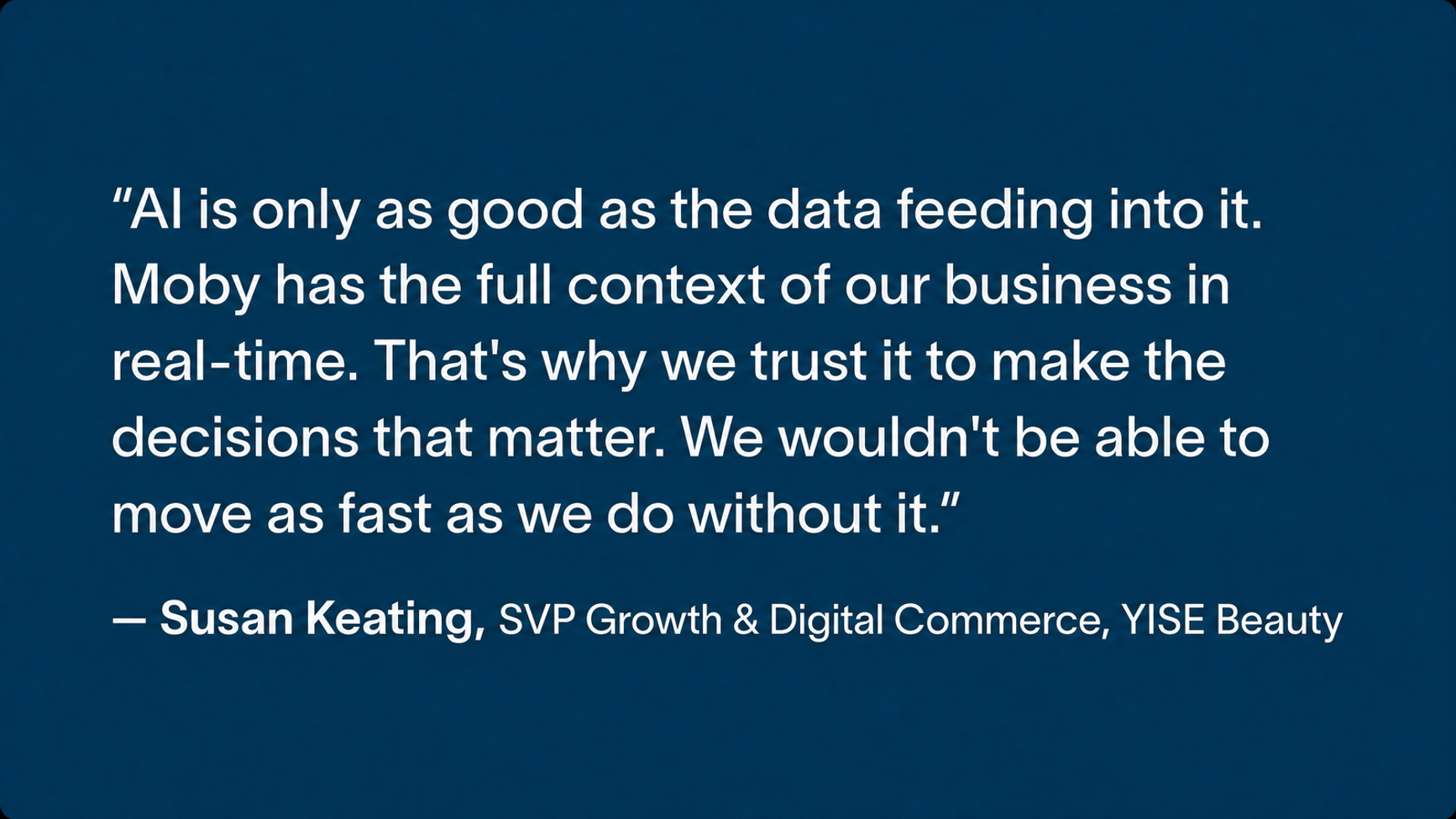
An AI answer can only be as reliable as the information underneath it. That’s why Moby starts with the Triple Whale foundation: the Data Platform, measurement, and Context Engine.
Data platform
Triple Whale brings real-time data from across commerce businesses into one place, including signals from stores, customers, products, marketing channels, and connected systems.
Moby can query this connected data when the work calls for it. You don’t have to upload an old report and hope it still reflects the business.
Measurement
Attribution, marketing mix modeling, and incrementality help show what’s working and explain what contributed to the outcome.
The Data Platform shows what happened. The measurement layer explains what drove it.
Ad platforms can use different windows or take credit for the same sale. Moby is built on measurement designed for those differences.
Context Engine
The Context Engine turns data, measurement, and company knowledge into context Moby can use and understand. It helps Moby interpret:
- What the company metrics mean
- How data sources relate
- Which measurement settings apply
- What the business is trying to achieve
- Which previous decisions and activities matter
It can also use commerce playbooks, benchmarks, and account activity. That helps Moby interpret what it sees.
Semantic layer
The semantic layer is a core part of the Context Engine. It may sound technical, but the idea is simple.
The semantic layer defines:
- What each metric means
- How each metric is calculated
- Which data sources should be used
- How customers, orders, products, campaigns, and ads relate
This helps prevent common mistakes. “Revenue,” “net sales,” and “conversion value” may all sound alike, but they’re not the same. The semantic layer helps Moby use the right meaning and source.
The numbers should keep updating as new data comes in. What they mean shouldn’t change from one question to the next.
What it means for Moby to be an AI harness
Moby isn’t one AI model. It’s the system around the model, the part that connects AI to the business it’s working for.
Operators can choose the model that fits the task. Moby’s current options include Claude, ChatGPT, Grok, Google Gemini, DeepSeek, and Seed.
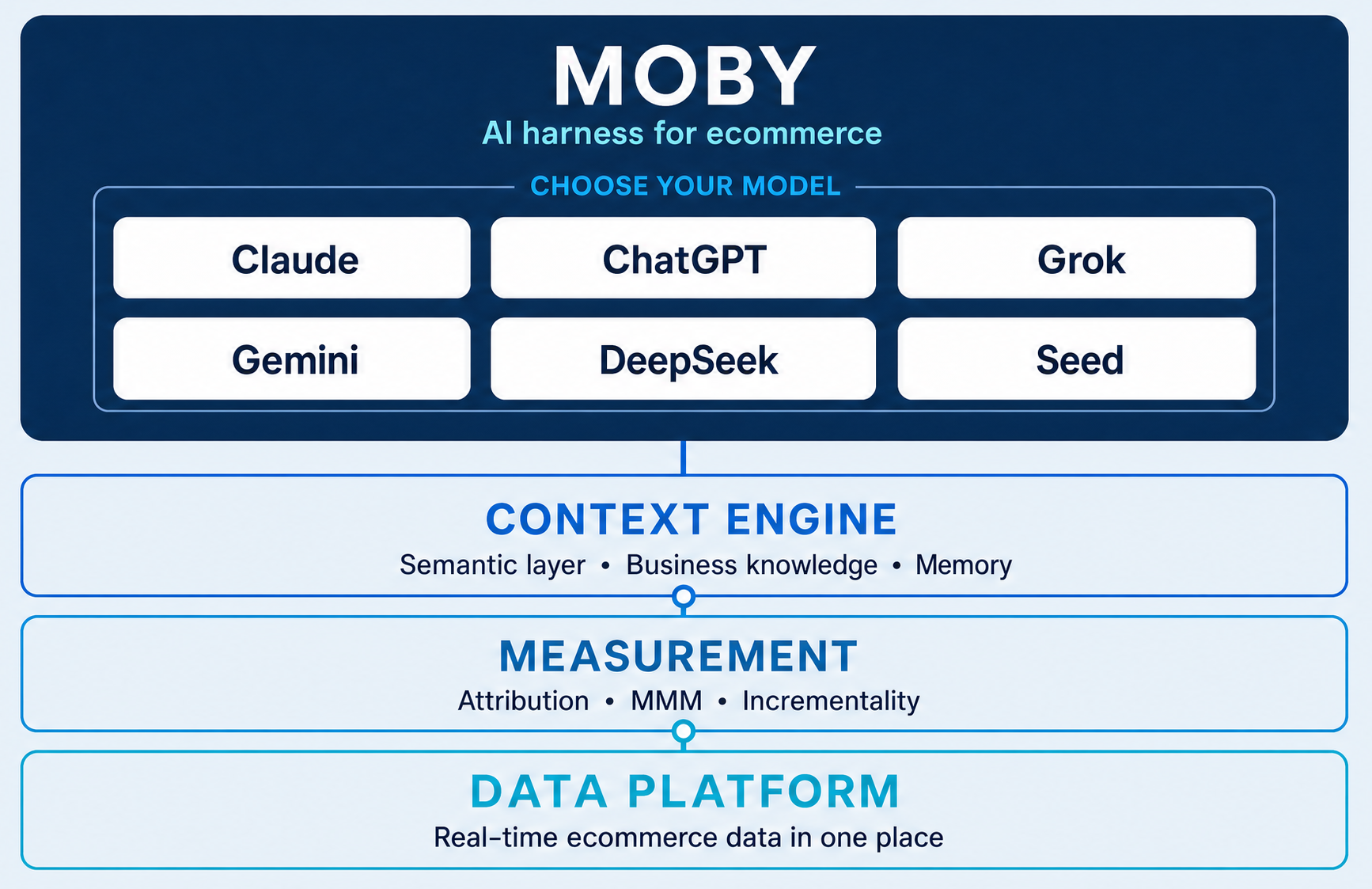
Whichever model an operator chooses, Moby brings together the same core pieces:
- Real-time commerce data
- Trusted measurement
- The Context Engine
- Relevant business memory
- Specialized tools
- Verification
- Permissions and control
This separation matters because models have different strengths. One may be better for deep analysis. Another may be faster for a short task. Another may be better for writing, coding, research, or creative work. Moby lets the operator choose while supplying the business context around that model.
Users don’t need to switch between different AI tools to get different jobs done. That fragmented approach creates context gaps: research may happen in one tool, analysis in another, and writing in a third, with none of those tools carrying context from the work happening elsewhere. Moby brings connected business data, saved context, and relevant prior conversations into one system, so teams can move between tasks and supported models without starting from scratch.
The model can change as the task or technology changes. The Triple Whale foundation stays in place. That means the business doesn’t have to rebuild its data, definitions, context, controls, and workflows each time a better model comes along.
How Moby works in practice
So, what happens when an operator gives Moby a real business question? Behind the scenes, Moby brings together the right data, measurement settings, business context, AI model, and tools. It then checks the work before helping the operator decide what to do next.
Here’s what that process can look like.
The Data Platform supplies the data
Moby can retrieve signals across spend, orders, revenue, customers, campaigns, creative, products, and site conversion.
Measurement provides the performance lens
Moby applies the right attribution model, customer definition, date range, and settings. So the analysis starts with the right metric.
The Context Engine supplies meaning
The Context Engine shows Moby how the signals relate. It can also bring in business history, instructions, playbooks, benchmarks, or recent account activity.
The chosen model supports the analysis
The selected model reasons over the assembled context. It might find that costs rose. Or it might find that conversion fell after a product sold out, or that someone changed a bid strategy the day before.
Moby coordinates and verifies the work
Moby checks the sources, definitions, dates, and evidence before it shares the result. No AI system is perfect. These checks help keep a polished guess from looking like a fact.
Moby helps complete the next step
Depending on the request, tools, and permissions, Moby may:
- Create a performance report
- Draft a creative brief
- Generate new creative
- Recommend a supported action
- Submit an action for review
- Create an Automation to monitor the metric
The model performs part of the reasoning. Moby coordinates the path from business data to context, answer, and action.
Why AI harnesses matter for commerce (and why Moby stands out)
Commerce teams don’t need AI just to produce more answers. They need help making better decisions across a business that changes every day. Ad costs move. Products sell out. Promotions end. Customer behavior shifts. The useful answer at 9 a.m. may be out of date by the afternoon.
An AI harness makes a model more useful in that environment. It connects the model to current business data, shared definitions, measurement, memory, tools, and controls. Instead of treating each prompt as a separate task, the harness gives AI a consistent way to understand the business and help move work forward.
Model choice
As covered above, operators can switch models based on the task (investigating ROAS, writing a brief, planning an experiment) without rebuilding the data connection each time.
Consistent business context
A typical commerce business has data spread across its store, ad platforms, email tools, finance systems, and other apps. Those sources may define the same metric in different ways. That’s how two people can ask about revenue or ROAS and come back with two different answers.
An AI harness gives the model a shared set of definitions and relationships. Revenue, CAC, ROAS, new customers, and other metrics can keep the same meaning from one question to the next. With Moby, that context comes from Triple Whale’s Data Platform, measurement, and Context Engine — not from the model making its own guess.
More trustworthy answers
Trust matters when an answer may shape a budget, forecast, promotion, or inventory plan. The team needs to know that the right dates, data sources, customer definitions, and measurement settings were used.
Moby works from Triple Whale’s connected data and trusted measurement foundation. It can use clear metric definitions, business knowledge, and relevant history, then check the evidence behind the result. These steps won’t make AI perfect, but they make the answer easier to understand, question, and use.
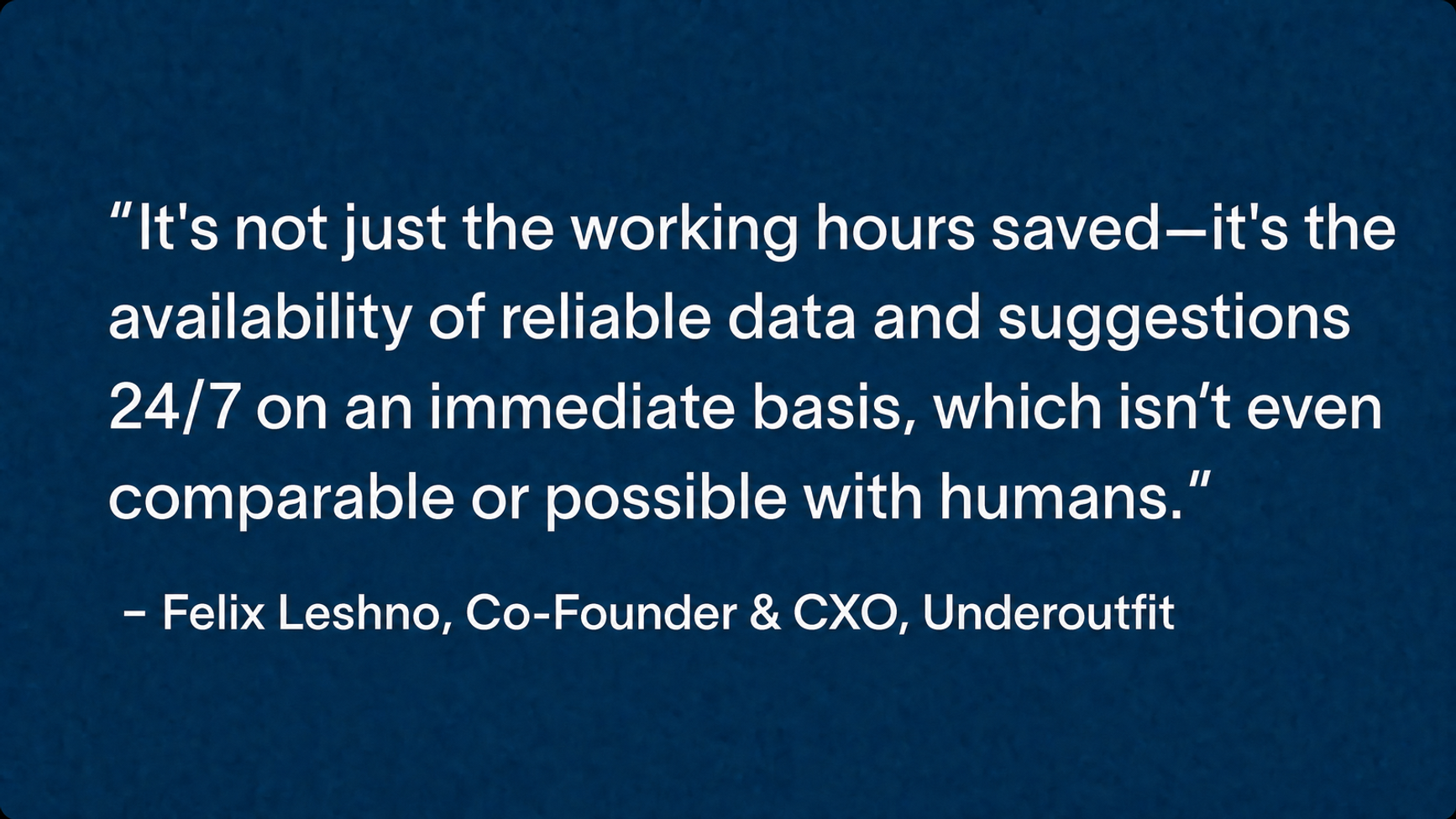
A shorter path to action
Finding an insight is often only the first step. Someone still has to turn it into a report, brief a teammate, make an asset, update another tool, or watch the metric over time. Each handoff creates more work and another chance for useful context to get lost.
Moby carries that same context into the next step — a report, a brief, a new asset, an Automation, or an action submitted for review, depending on the tools and permissions available. The goal is a shorter path from “What happened?” to “What should we do next?”
Operator control
Using AI doesn’t mean handing over the business with no oversight. Some tasks are safe to automate. Others need a person to review the evidence, weigh a tradeoff, or approve a change.
Moby’s work follows the connections, permissions, instructions, approval settings, and guardrails in place. The operator sets the goal and stays informed. Moby can handle more of the research and coordination while people remain in control of the decisions that matter.
Getting started with Moby
Getting started with Moby doesn't mean starting over. Teams can bring the context and reusable instructions they've built in other AI tools into Moby, then connected the business data, systems, and supported tools they already use.
1. Bring over your existing AI context
Start with the business context, preferences, and reusable instructions your team has already developed in other AI tools. Supported memory imports can help bring relevant context into Moby. Prompts and repeatable workflows can also be added as reusable skills, so the work your team has already done doesn’t have to be rebuilt from scratch.
2. Connect your business data
Connect the commerce, marketing, and business platforms Moby needs through Triple Whale integrations. This gives Moby access to the current data behind questions about revenue, customers, products, campaigns, attribution, and performance.
3. Connect the tools in your stack
Use connectors to link the supported tools your team already works in. Depending on the available connection and permissions, Moby can use information from those systems or help complete work through them. This keeps more of the workflow connected instead of splitting it across separate AI tools.
4. Add your goals and guardrails
Give Moby the context that should shape its work, such as metric definitions, business goals, targets, brand guidance, inventory constraints, reporting preferences, and approval requirements. You can start with the information that would materially change an answer or recommendation.
5. Start with one useful job
Once the foundation is in place, begin with a real question or task. Ask Moby to investigate a performance change, compare campaigns, create a report, develop a brief, or recommend what to look at next. From there, you can add more context, tools, skills, and Automations as your team finds repeatable ways to use Moby.
Conclusion
Moby isn’t just another place to access an AI model. It connects the models operators choose to the data, measurement, and context of their business.
That trust comes from the foundation beneath the model: fresh data, clear definitions, strong measurement, business context, verification, and control.
Moby brings those pieces together in an AI harness built for commerce.