For almost two decades, the path to purchase has been quite structured: You type what you’re looking for into a search bar and you browse the websites until you find the product you want.
Google ranked the options. Amazon surfaced the bestsellers. Ads filled in the gaps. Discovery was a process of elimination fueled by keywords and channel hopping.
That model is changing — and fast.
AI-powered search tools like Google AI Overviews, ChatGPT, and Perplexity have removed much of the link-hopping and dove straight into presenting you with a product.
For shoppers, this feels like a convenience upgrade. For brands and retailers, it's a fundamental shift in where and how products get discovered.
This article explores it all — AI ecommerce SEO, engines, trends, and what it all means for the future of marketing.
Key takeaways
AI search for ecommerce is a new method of online shopping, shaping everything from user journeys to brand visibility to marketing strategies.
AI search tools like ChatGPT, Google AI Overviews, and Perplexity synthesize answers instead of returning links.
Shopper behavior is shifting — queries are getting longer, more conversational, and more specific.
Ecommerce teams should start by understanding their current AI visibility baseline using an online Visibility Tool
What Is AI Search for Ecommerce?
AI search for ecommerce refers to search that uses large language models (LLMs) and machine learning to interpret shopping queries and generate direct, synthesized answers.
It reads a question, draws on information from across the web, and produces a response: a product recommendation, a feature comparison, a summary of reviews.
Type "waterproof hiking boots under $150" into a conventional search engine and you get a page of results that you then navigate yourself. That’s the system built by Search Engine Optimization (SEO).
Ask the same question to an AI search tool and you're likely to receive a short list of specific boots, with reasons, sourced from product pages, editorial roundups, and customer reviews. This is a system built on Generative Engine Optimization (GEO).
Traditional Search vs AI Search
Category
Traditional Search (SEO)
AI Search (GEO)
Query
Keyword — “noise cancelling headphones”
Conversational — “what are the best noise cancelling headphones for work?”
What
Ranked list of links
Synthesized answer
How
Shopper selects and visits pages
Shopper receives recommendations and follow-up queries
Relevance
Determined by SEO signals
Determined by intent and context
How AI Search Is Changing the Buyer Journey (Ecommerce Trends)
When search engines rewarded brevity, shoppers learned to type in fragments — "best blender," "cheap running shoes," "waterproof jacket women." The query was a means to an end: Get to the results page, then do the real work of finding something useful.
AI now intermediates the buying journey.
These systems can understand context and generate a direct answer. This is known as “semantic search.”
Semantic search understands the meaning behind a query, not just the keywords. For example, "shoes for a beach wedding" returns sandals and strappy heels. This is the foundation most modern search runs on, including Google for years now.
Shoppers are now taking this further by ditching the keywords and writing the queries the way they actually think. This is called “conversational search.”
Conversational search is multi-turn, dialogue-based querying. The shopper refines their decision-making through follow-ups. For example, they may follow the query above with "show me something similar but cheaper" or "does it come in green?"
The system holds context across the conversation rather than treating each query as a fresh search. This is where generative AI tools for ecommerce like ChatGPT, Perplexity, and Rufus primarily live.
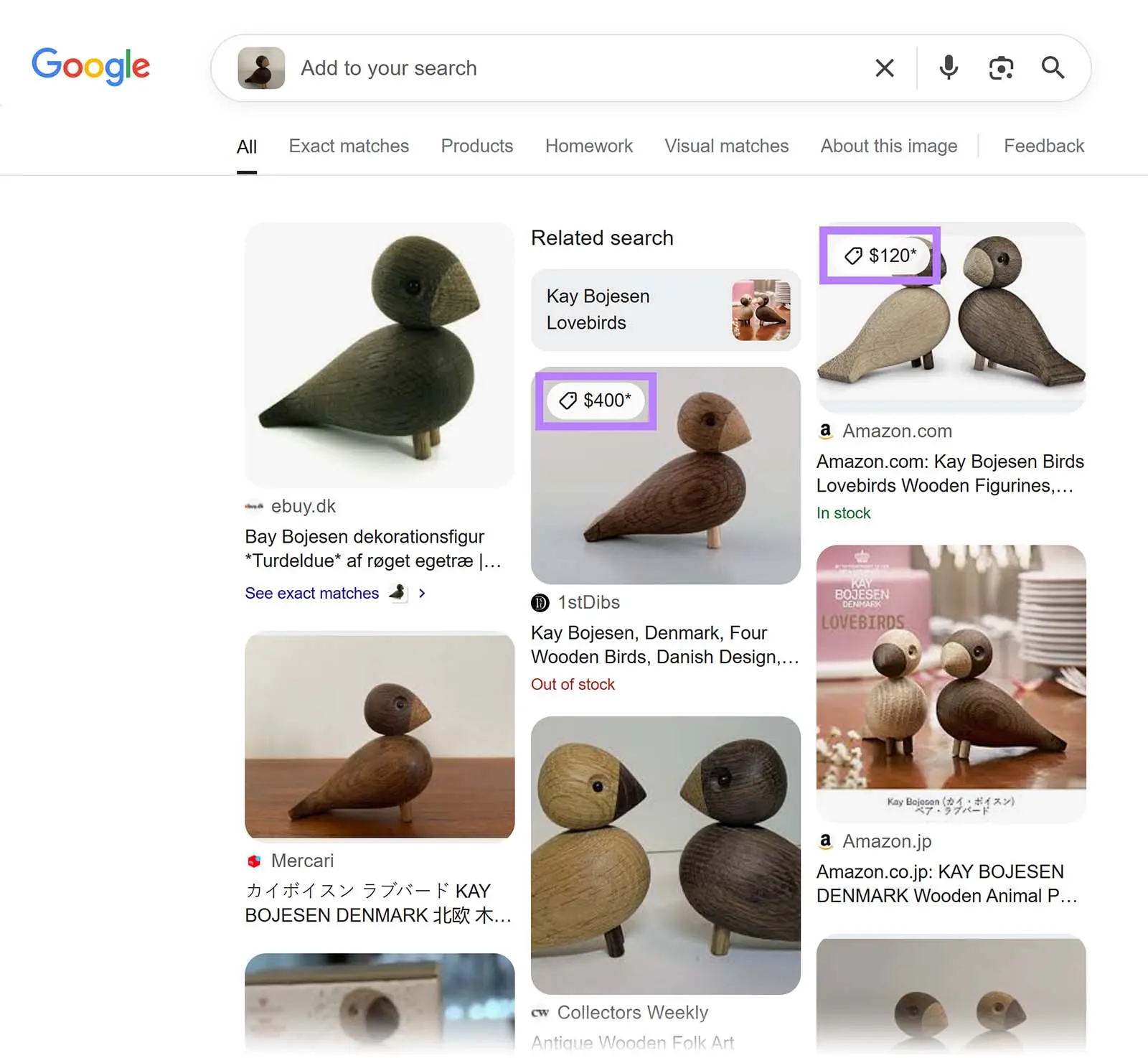
Visual search is when you upload a photo of a figurine you saw at a friend’s house. The system finds visually similar products. Pinterest Lens, Google Lens, and Amazon's camera search are the main players.
AI search platforms are all three simultaneously (multisearch) — they interpret meaning (semantic), can accept images (visual), and maintain context (conversational).
AI in Search Ecommerce
Type
Definition
Example query
Example Tool
Semantic search
System understands the meaning behind a query
"Comfortable shoes for standing all day"
Google AI Overviews, Perplexity
Conversational search
Multi-turn, dialogue-based querying
"I need a moisturizer" → "something for sensitive skin" → "under $30"
ChatGPT, Claude, Gemini
Visual search
Upload a photo, and system finds visually similar products
(Upload photo of lamp)
Google Lens, Pinterest Lens
Multisearch
Uses multiple types, such as photo upload and text for additional context
Upload photo of lamp, plus “find a similar style at Ikea”
That means the discovery journey looks different depending on where it starts. Across newer platforms, a few distinct behaviors are showing what the journey is shaping into:
Re-querying and refining
As mentioned, queries are getting longer, more specific, and more conversational. Instead of "coffee maker under 100," someone might ask: "What's a good coffee maker for a small apartment that's easy to clean and doesn't take up a lot of counter space?"
The search bar is starting to function like a knowledgeable friend who happens to know every product on the market. So on conversational LLMs like ChatGPT and Perplexity, shoppers don't stop at the first answer.
They follow up with things like "What about for someone with wide feet?" "Is there a version under $100?" "How does that compare to the other one you mentioned?" The search becomes a dialogue, with each exchange narrowing the consideration set before the shopper ever visits a product page.
Clicking through to product pages.
A shopper who clicks through from an AI recommendation has already been pre-qualified: they know the product name, they've read a summary of its strengths, and they've decided it's worth a closer look.
The visit is shorter, more intentional, and further along in the decision process than a typical organic search click.
According to ContentGrip, shoppers arriving from generative AI sources show 10% higher engagement, 32% longer visits, and a 27% lower bounce rate.
Buying inside platforms
A new generation of AI-powered shopping experiences are enabling transactions directly within the conversation.
Rather than being directed to a website to complete a purchase, shoppers can browse, compare, and buy without ever leaving the AI interface they're already in.
This ecommerce trend is already happening across several major platforms.
Google's AI Overviews and Shopping Graph allow you to discover and purchase products directly within search results.
Meta's AI assistant, embedded across Facebook and Instagram, is increasingly being used to surface and sell products within feeds and conversations.
Many platforms, such as Amazon, envision a future in which AI agents do the work for you. This is the difference between generative AI and agentic AI.
Which Platforms Are Driving AI-powered Product Discovery?
Product discovery is now scattered across several distinct types of AI-powered experiences, each with its own logic for how shoppers find and evaluate products.
AI Search Engines
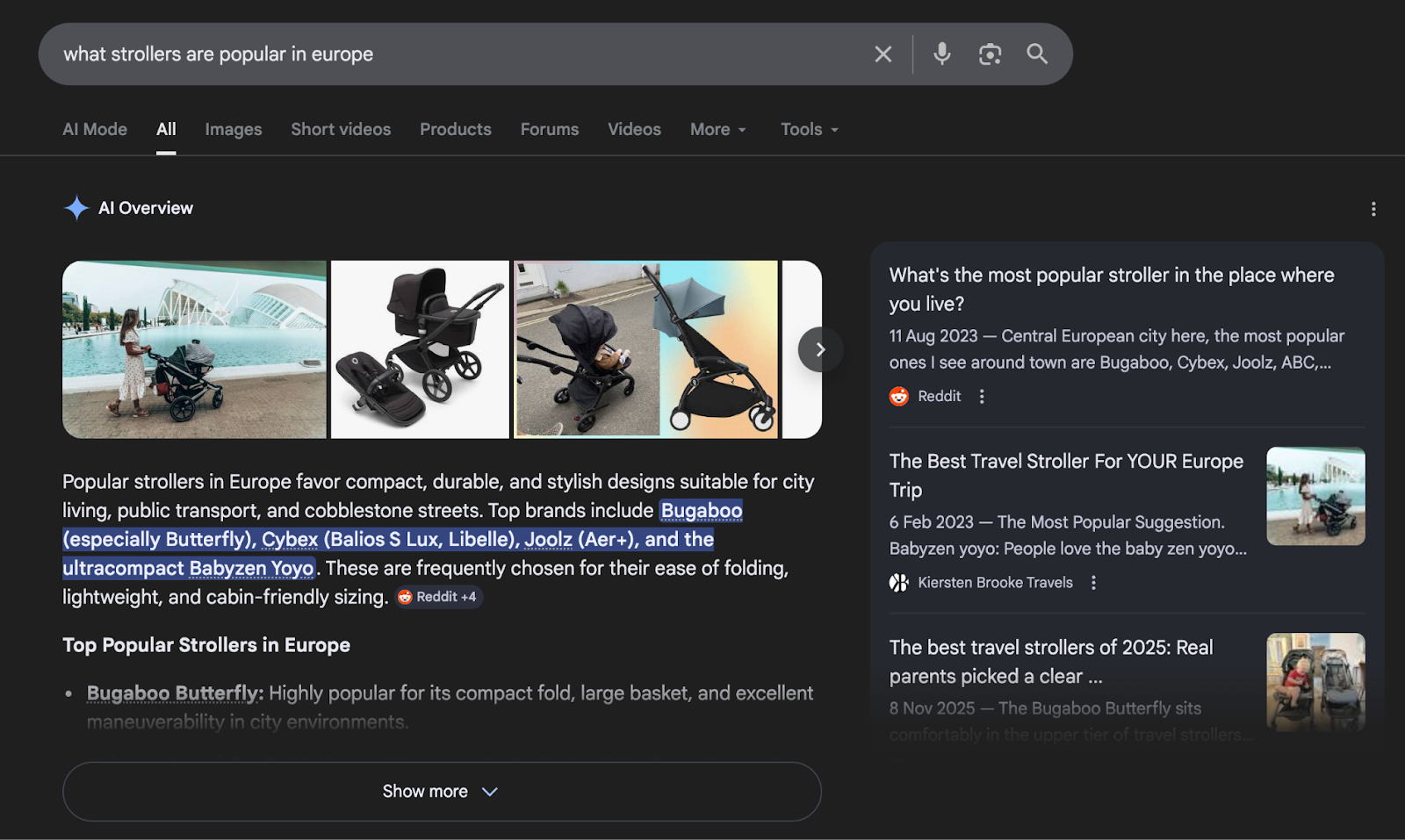
These are the easiest entry points. Tools like Perplexity and Google's AI Overviews intercept high-intent queries and return synthesized answers quickly.
For AI in ecommerce, this is where a significant share of early-stage discovery is shifting.
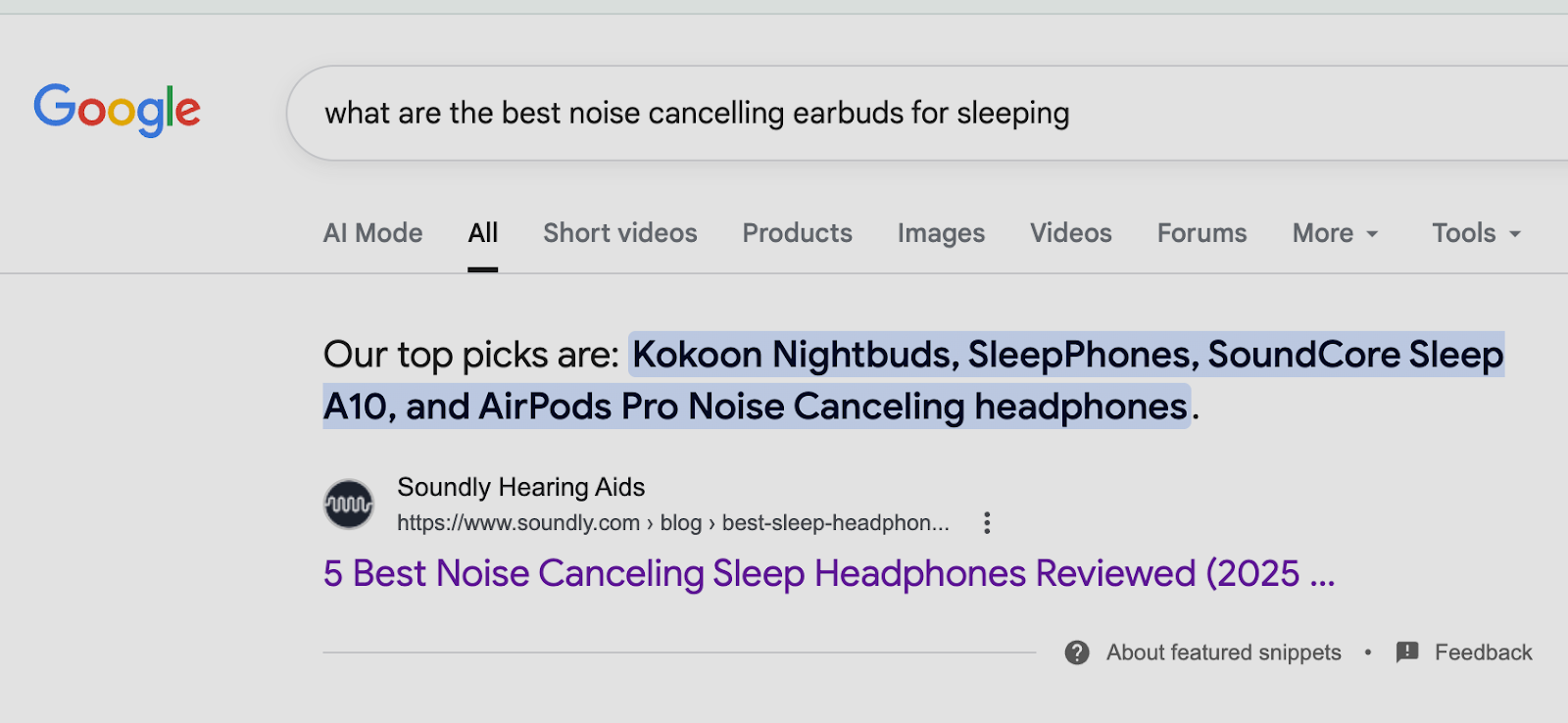
Sometimes, it looks like a Featured Snippet. According to Google, “featured snippets are shown when Google thinks people want answers that can be found in a short piece of a website.”
Google says it shows “AI Overviews … when our systems determine that generative AI can be especially helpful – for example, when you want to quickly understand information from a range of sources.”
LLMs and Conversational Assistants
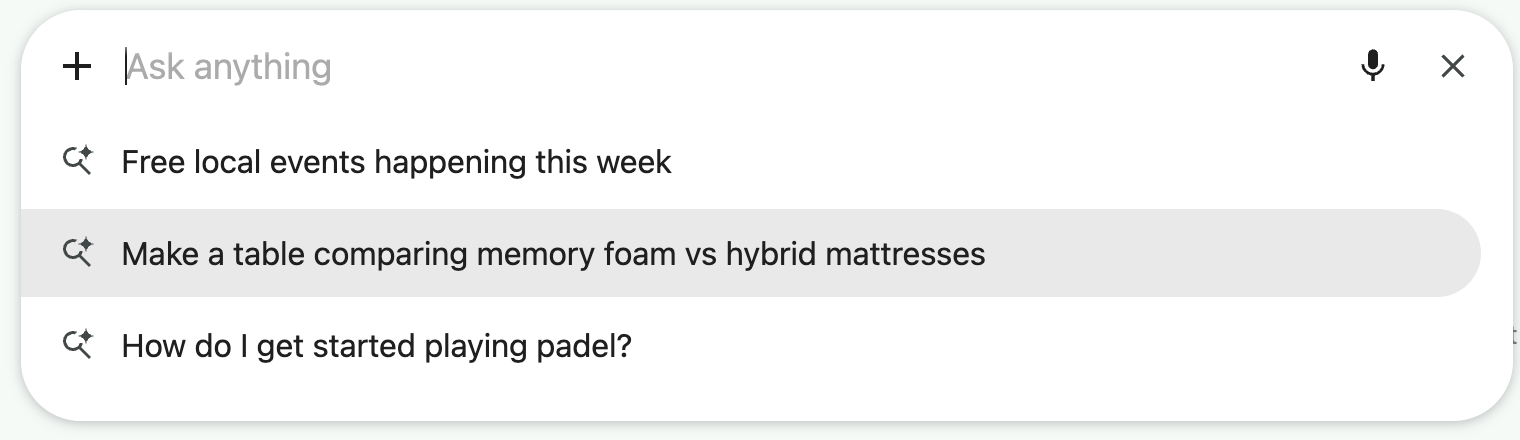
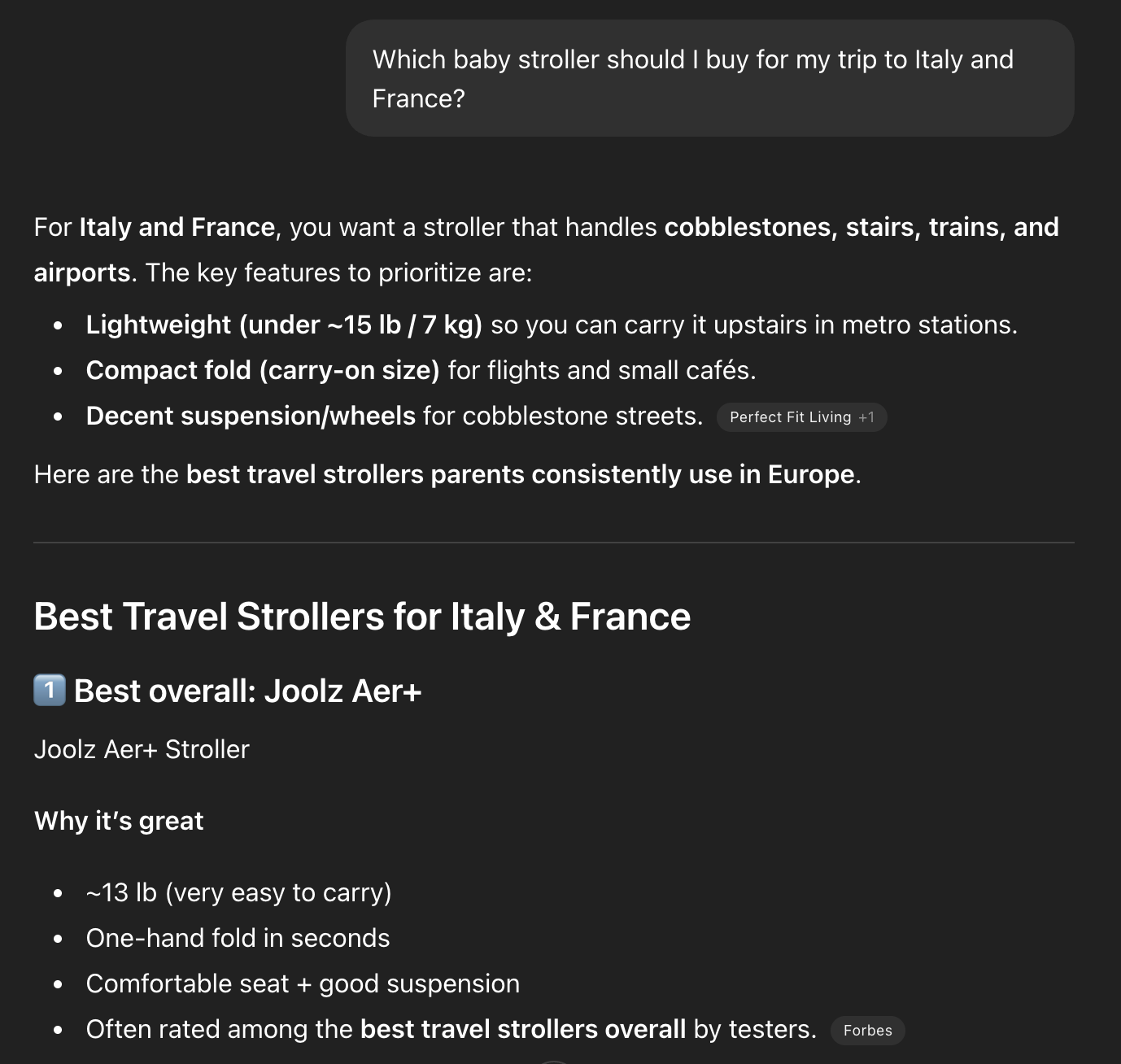
Conversational assistants — ChatGPT being the most prominent — handle a different kind of query. Shoppers arrive with more context, more nuance, and more willingness to go back and forth.
Source: ChatGPT
The consideration process happens inside the conversation rather than across multiple tabs.
ChatGPT has more than 800 million weekly users, and Google's AI Overviews reach more than 1.5 billion users per month Statista — making these two platforms the winners at the moment.
But there are a few more contenders, including:
Perplexity: An LLM positioned itself as an answer engine. Its product-related responses often include sourced recommendations with side-by-side comparisons.
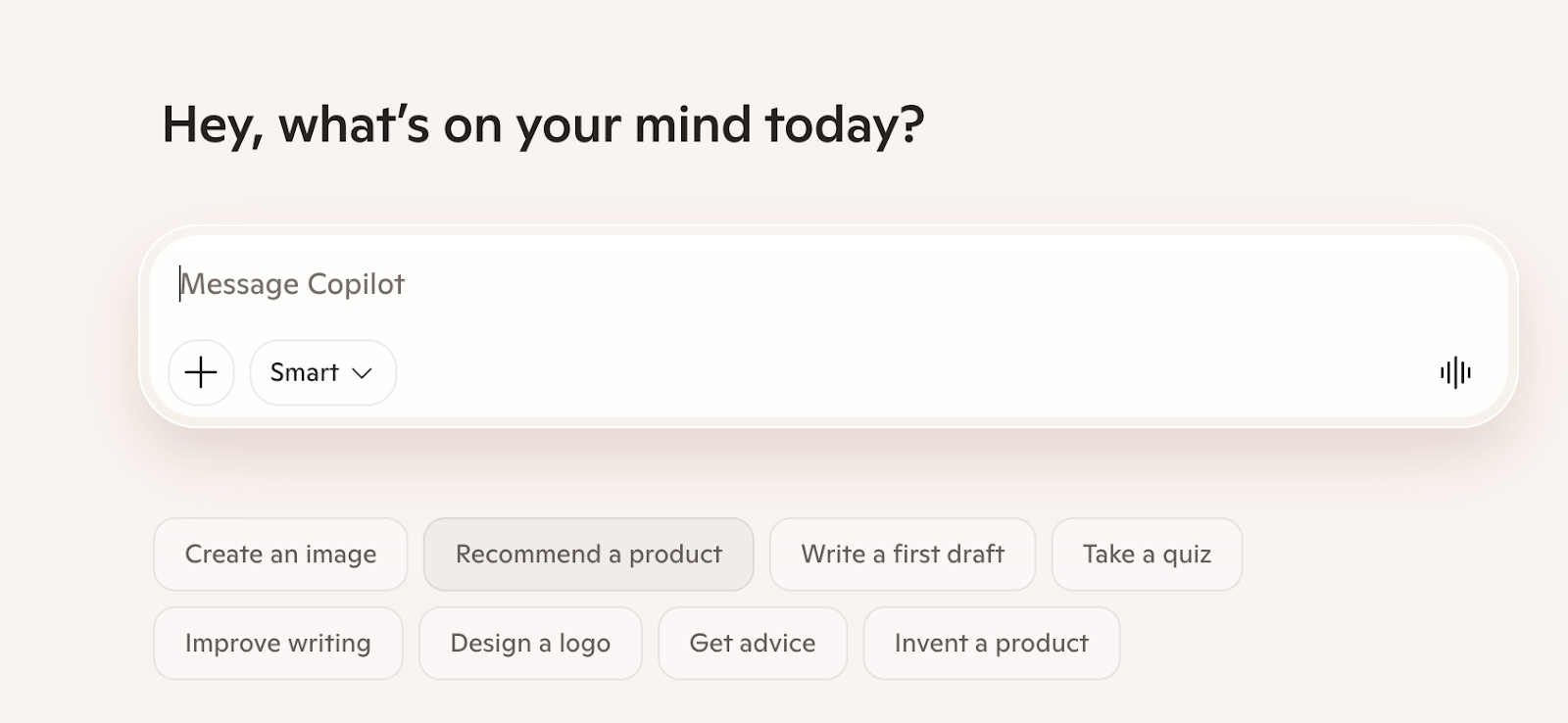
Microsoft Copilot: Embedded across Windows, Edge, and Microsoft 365, it brings AI-assisted shopping into its ecosystem.
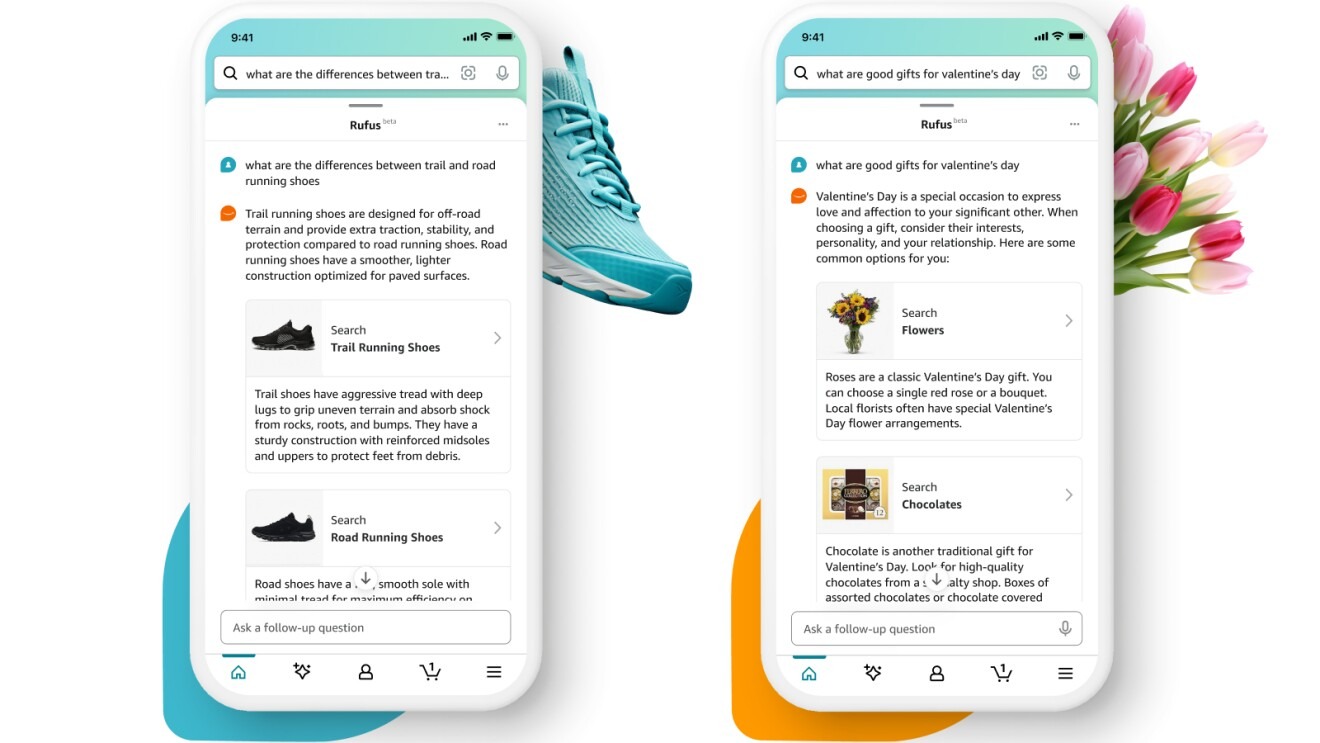
Amazon's AI shopping assistant, Rufus: Operates inside the world's largest product catalog, Amazon. Rufus surfaces relevant listings, and guides purchase decisions entirely within Amazon's ecosystem.
Photo source: Amazon
AI Visibility: How AI Systems Surface Products and Brands
Wonder why some brands appear in AI-generated answers and others don't? It starts with understanding how – and where – surfacing appears.
Mentions are the most direct form of AI visibility. The AI names your brand in its response.
If someone asks "what's the best email marketing tool for Shopify stores" and the AI responds with a list that includes your brand by name — that's a mention.
It means the model has absorbed enough signal about your brand, across enough credible sources, to surface it as a relevant answer unprompted.
Citations are a step removed but equally powerful. This is when the AI doesn't just name your brand, but it links to or references a piece of content. These could be a blog post, a review on a third-party site, or a comparison article that features your product.
Being cited means the AI has identified your content as authoritative enough to back up its answer.
mentioned favorably and being mentioned as a warning.
A brand can be mentioned frequently and cited often, but if the surrounding content — reviews, forums, editorial coverage — skews negative or inconsistent, the AI will reflect that.
AI Visibility: What Signals Influence the Product Recommendations
LLMs reward current, authoritative, and well-structured content. Here’s how to write for AI Search, so you can understand how to get better AI visibility.
Product data and product feeds
This plays a role in how accurately and confidently AI systems describe what a brand sells. Brands with rich, well-organized product data appear to be characterized more precisely (remember, sentiment is important, too!) in AI responses than those without it. This includes:
Detailed product attributes, categories, and specifications
Pricing context and product positioning
Consistent naming and descriptors across platforms
Up-to-date inventory and availability information
Structured information (broadly)
This refers to the kind that's consistently formatted, clearly labeled, and easy for a system to parse. This includes:
How a website is organized and internally linked
How blog content is organized and internally linked
Consistency of brand information across directories, platforms, and listings
Clear, well-defined relationships between products, categories, and use cases
Authoritative sources
These carry significant weight. First-party content matters, but third-party validation seems to matter more, because it signals that a brand's reputation exists beyond its own marketing. AI systems appear to weight:
Coverage from reputable, independent industry publications
Presence on established review and comparison platforms
Editorial mentions from journalists and recognized experts
Links and references from sites with established credibility in a category
Contextual relevance to queries
Specificity could be more important than volume. Brands that appear repeatedly in content tied to specific, meaningful contexts appear to get surfaced more reliably when users ask questions in those same contexts. Relevant signals here include:
Association with particular use cases, audiences, or problems
Appearing in content that directly answers the kinds of questions users ask
Being discussed alongside the right category language and terminology
Depth of coverage on specific topics rather than broad, surface-level mentions
How AI search Is Changing the Ecommerce Marketing Playbook
This is the beginning of what's being called zero-click search — and for ecommerce brands, it cuts both ways.
On one hand, appearing in an AI-generated response is genuine visibility: Your brand reached someone at a high-intent moment. On the other hand, no click means no session, no pixel, no conversion event. The value of that exposure is real but largely invisible to standard measurement tools.
Marketers who rely purely on last-click or even multi-touch attribution will increasingly undercount the influence of AI-driven discovery on downstream conversions.
Brands must now think about visibility as a multi-system problem. It's no longer enough to rank on Google.
Visibility across ChatGPT, Perplexity, Gemini, Claude, and AI-powered shopping surfaces is becoming its own strategic priority — one that requires a different set of inputs, a different content approach, and different ways of measuring success.
What Ecommerce Teams Should Do Now
Most ecommerce brands currently have no idea how they appear in AI-generated answers, or whether they appear at all. Here's where to focus first.
Monitor where AI platforms reference your brand
You can't improve what you can't see. Before making any changes, understand your current AI visibility — where you're showing up, how you're being described, and where you're absent entirely across the AI platforms your customers are using.
Track how your brand is mentioned across AI-generated responses
Identify which sources are driving citations in your category
Note how your brand is characterized and whether it's accurate
Improve the quality of your product information
Brands with rich product data get characterized more precisely; brands without it get overlooked or misrepresented.
Fill out every available product attribute across your feeds and listings
Keep product information consistent across every platform
Treat product data as a marketing asset, not just an operational one
Understand how your customers search conversationally
The queries that surface your brand in AI responses often look nothing like traditional keyword searches. Getting familiar with the questions, comparisons, and use-case language your customers actually use is increasingly what determines whether you show up.
Study the natural language questions your customers ask about your category
Create content that directly answers specific, intent-driven queries
Think in terms of problems your product solves, not just what it is
Earn presence on the sources AI systems trust
Off-site reputation matters enormously. Being referenced on authoritative, independent platforms signals credibility to AI systems and expands the surface area where your brand can be discovered and cited.
Build presence on trusted platforms like Reddit, YouTube, and industry publications
Use PR to generate coverage that earns citations at scale
Monitor review sites and engage actively with what's being said about your brand
Experiment with emerging AI discovery channels
Brands that start building familiarity with these AI-powered channels now will be better positioned as they mature and become a more significant share of discovery.
Test how your brand appears across different AI assistants and search tools
Explore emerging AI shopping surfaces relevant to your category
Treat this as an experimental channel worth learning, not a solved one
This is exactly the gap Triple Whale's AI Visibility tool was built to close. It’s the only AI search application built for ecommerce teams who need not only metrics, but also the next steps to improve their brand visibility in this modern age.
The Future of Ecommerce Discovery in an AI-Powered World
As AI systems become more capable, more integrated, and more personal, the way people find and buy products is set to change more dramatically in the next few years than it has in the last two decades.
Stay on top of it all with Triple Whale — your all-in-one platform for unified data, proven measurement, AI visibility tracking, and much more. Book a demo today!
Ecommerce Product Search FAQs
How do AI search engines recommend products?
The AI search engine pulls relevant information from across the web such as product pages, reviews, editorial content, comparison guides, and synthesizes a response.
Which platforms are driving AI-powered product discovery?
The biggest platforms at the moment are Google AI Overviews, ChatGPT, and Perplexity. Together, they reach billions of users monthly.
Can ecommerce brands influence how AI search engines surface products?
Yes, they can; although, it’s not as defined as SEO. Influencing AI visibility includes structured information across your website, third-party mentions and citations from authoritative sources.
To get started, you can track and influence your AI visibility using a free tool like AI Visibility by Triple Whale.
What types of queries do people ask AI search engines when shopping?
Ecommerce product searches tend to be longer and more conversational than traditional SEO keywords.
Rather than typing "running shoes," a shopper might ask "what's the best running shoe for someone with wide feet who runs on trails?" The query doesn't have to be perfectly worded.
Do AI search engines replace traditional ecommerce search?
No, not yet. 96.98% of clicks happen in the top 10 search results, according to Ahrefs. But using AI in ecommerce is estimated to be the future of product search.
Component Sales
5.32K
Benchmark your ecommerce brand against industry leaders
For almost two decades, the path to purchase has been quite structured: You type what you’re looking for into a search bar and you browse the websites until you find the product you want.
Google ranked the options. Amazon surfaced the bestsellers. Ads filled in the gaps. Discovery was a process of elimination fueled by keywords and channel hopping.
That model is changing — and fast.
AI-powered search tools like Google AI Overviews, ChatGPT, and Perplexity have removed much of the link-hopping and dove straight into presenting you with a product.
For shoppers, this feels like a convenience upgrade. For brands and retailers, it's a fundamental shift in where and how products get discovered.
This article explores it all — AI ecommerce SEO, engines, trends, and what it all means for the future of marketing.
Key takeaways
AI search for ecommerce is a new method of online shopping, shaping everything from user journeys to brand visibility to marketing strategies.
AI search tools like ChatGPT, Google AI Overviews, and Perplexity synthesize answers instead of returning links.
Shopper behavior is shifting — queries are getting longer, more conversational, and more specific.
Ecommerce teams should start by understanding their current AI visibility baseline using an online Visibility Tool
What Is AI Search for Ecommerce?
AI search for ecommerce refers to search that uses large language models (LLMs) and machine learning to interpret shopping queries and generate direct, synthesized answers.
It reads a question, draws on information from across the web, and produces a response: a product recommendation, a feature comparison, a summary of reviews.
Type "waterproof hiking boots under $150" into a conventional search engine and you get a page of results that you then navigate yourself. That’s the system built by Search Engine Optimization (SEO).
Ask the same question to an AI search tool and you're likely to receive a short list of specific boots, with reasons, sourced from product pages, editorial roundups, and customer reviews. This is a system built on Generative Engine Optimization (GEO).
Traditional Search vs AI Search
Category
Traditional Search (SEO)
AI Search (GEO)
Query
Keyword — “noise cancelling headphones”
Conversational — “what are the best noise cancelling headphones for work?”
What
Ranked list of links
Synthesized answer
How
Shopper selects and visits pages
Shopper receives recommendations and follow-up queries
Relevance
Determined by SEO signals
Determined by intent and context
How AI Search Is Changing the Buyer Journey (Ecommerce Trends)
When search engines rewarded brevity, shoppers learned to type in fragments — "best blender," "cheap running shoes," "waterproof jacket women." The query was a means to an end: Get to the results page, then do the real work of finding something useful.
AI now intermediates the buying journey.
These systems can understand context and generate a direct answer. This is known as “semantic search.”
Semantic search understands the meaning behind a query, not just the keywords. For example, "shoes for a beach wedding" returns sandals and strappy heels. This is the foundation most modern search runs on, including Google for years now.
Shoppers are now taking this further by ditching the keywords and writing the queries the way they actually think. This is called “conversational search.”
Conversational search is multi-turn, dialogue-based querying. The shopper refines their decision-making through follow-ups. For example, they may follow the query above with "show me something similar but cheaper" or "does it come in green?"
The system holds context across the conversation rather than treating each query as a fresh search. This is where generative AI tools for ecommerce like ChatGPT, Perplexity, and Rufus primarily live.
Visual search is when you upload a photo of a figurine you saw at a friend’s house. The system finds visually similar products. Pinterest Lens, Google Lens, and Amazon's camera search are the main players.
AI search platforms are all three simultaneously (multisearch) — they interpret meaning (semantic), can accept images (visual), and maintain context (conversational).
AI in Search Ecommerce
Type
Definition
Example query
Example Tool
Semantic search
System understands the meaning behind a query
"Comfortable shoes for standing all day"
Google AI Overviews, Perplexity
Conversational search
Multi-turn, dialogue-based querying
"I need a moisturizer" → "something for sensitive skin" → "under $30"
ChatGPT, Claude, Gemini
Visual search
Upload a photo, and system finds visually similar products
(Upload photo of lamp)
Google Lens, Pinterest Lens
Multisearch
Uses multiple types, such as photo upload and text for additional context
Upload photo of lamp, plus “find a similar style at Ikea”
That means the discovery journey looks different depending on where it starts. Across newer platforms, a few distinct behaviors are showing what the journey is shaping into:
Re-querying and refining
As mentioned, queries are getting longer, more specific, and more conversational. Instead of "coffee maker under 100," someone might ask: "What's a good coffee maker for a small apartment that's easy to clean and doesn't take up a lot of counter space?"
The search bar is starting to function like a knowledgeable friend who happens to know every product on the market. So on conversational LLMs like ChatGPT and Perplexity, shoppers don't stop at the first answer.
They follow up with things like "What about for someone with wide feet?" "Is there a version under $100?" "How does that compare to the other one you mentioned?" The search becomes a dialogue, with each exchange narrowing the consideration set before the shopper ever visits a product page.
Clicking through to product pages.
A shopper who clicks through from an AI recommendation has already been pre-qualified: they know the product name, they've read a summary of its strengths, and they've decided it's worth a closer look.
The visit is shorter, more intentional, and further along in the decision process than a typical organic search click.
According to ContentGrip, shoppers arriving from generative AI sources show 10% higher engagement, 32% longer visits, and a 27% lower bounce rate.
Buying inside platforms
A new generation of AI-powered shopping experiences are enabling transactions directly within the conversation.
Rather than being directed to a website to complete a purchase, shoppers can browse, compare, and buy without ever leaving the AI interface they're already in.
This ecommerce trend is already happening across several major platforms.
Google's AI Overviews and Shopping Graph allow you to discover and purchase products directly within search results.
Meta's AI assistant, embedded across Facebook and Instagram, is increasingly being used to surface and sell products within feeds and conversations.
Many platforms, such as Amazon, envision a future in which AI agents do the work for you. This is the difference between generative AI and agentic AI.
Which Platforms Are Driving AI-powered Product Discovery?
Product discovery is now scattered across several distinct types of AI-powered experiences, each with its own logic for how shoppers find and evaluate products.
AI Search Engines
These are the easiest entry points. Tools like Perplexity and Google's AI Overviews intercept high-intent queries and return synthesized answers quickly.
For AI in ecommerce, this is where a significant share of early-stage discovery is shifting.
Sometimes, it looks like a Featured Snippet. According to Google, “featured snippets are shown when Google thinks people want answers that can be found in a short piece of a website.”
Google says it shows “AI Overviews … when our systems determine that generative AI can be especially helpful – for example, when you want to quickly understand information from a range of sources.”
LLMs and Conversational Assistants
Conversational assistants — ChatGPT being the most prominent — handle a different kind of query. Shoppers arrive with more context, more nuance, and more willingness to go back and forth.
Source: ChatGPT
The consideration process happens inside the conversation rather than across multiple tabs.
ChatGPT has more than 800 million weekly users, and Google's AI Overviews reach more than 1.5 billion users per month Statista — making these two platforms the winners at the moment.
But there are a few more contenders, including:
Perplexity: An LLM positioned itself as an answer engine. Its product-related responses often include sourced recommendations with side-by-side comparisons.
Microsoft Copilot: Embedded across Windows, Edge, and Microsoft 365, it brings AI-assisted shopping into its ecosystem.
Amazon's AI shopping assistant, Rufus: Operates inside the world's largest product catalog, Amazon. Rufus surfaces relevant listings, and guides purchase decisions entirely within Amazon's ecosystem.
Photo source: Amazon
AI Visibility: How AI Systems Surface Products and Brands
Wonder why some brands appear in AI-generated answers and others don't? It starts with understanding how – and where – surfacing appears.
Mentions are the most direct form of AI visibility. The AI names your brand in its response.
If someone asks "what's the best email marketing tool for Shopify stores" and the AI responds with a list that includes your brand by name — that's a mention.
It means the model has absorbed enough signal about your brand, across enough credible sources, to surface it as a relevant answer unprompted.
Citations are a step removed but equally powerful. This is when the AI doesn't just name your brand, but it links to or references a piece of content. These could be a blog post, a review on a third-party site, or a comparison article that features your product.
Being cited means the AI has identified your content as authoritative enough to back up its answer.
mentioned favorably and being mentioned as a warning.
A brand can be mentioned frequently and cited often, but if the surrounding content — reviews, forums, editorial coverage — skews negative or inconsistent, the AI will reflect that.
AI Visibility: What Signals Influence the Product Recommendations
LLMs reward current, authoritative, and well-structured content. Here’s how to write for AI Search, so you can understand how to get better AI visibility.
Product data and product feeds
This plays a role in how accurately and confidently AI systems describe what a brand sells. Brands with rich, well-organized product data appear to be characterized more precisely (remember, sentiment is important, too!) in AI responses than those without it. This includes:
Detailed product attributes, categories, and specifications
Pricing context and product positioning
Consistent naming and descriptors across platforms
Up-to-date inventory and availability information
Structured information (broadly)
This refers to the kind that's consistently formatted, clearly labeled, and easy for a system to parse. This includes:
How a website is organized and internally linked
How blog content is organized and internally linked
Consistency of brand information across directories, platforms, and listings
Clear, well-defined relationships between products, categories, and use cases
Authoritative sources
These carry significant weight. First-party content matters, but third-party validation seems to matter more, because it signals that a brand's reputation exists beyond its own marketing. AI systems appear to weight:
Coverage from reputable, independent industry publications
Presence on established review and comparison platforms
Editorial mentions from journalists and recognized experts
Links and references from sites with established credibility in a category
Contextual relevance to queries
Specificity could be more important than volume. Brands that appear repeatedly in content tied to specific, meaningful contexts appear to get surfaced more reliably when users ask questions in those same contexts. Relevant signals here include:
Association with particular use cases, audiences, or problems
Appearing in content that directly answers the kinds of questions users ask
Being discussed alongside the right category language and terminology
Depth of coverage on specific topics rather than broad, surface-level mentions
How AI search Is Changing the Ecommerce Marketing Playbook
This is the beginning of what's being called zero-click search — and for ecommerce brands, it cuts both ways.
On one hand, appearing in an AI-generated response is genuine visibility: Your brand reached someone at a high-intent moment. On the other hand, no click means no session, no pixel, no conversion event. The value of that exposure is real but largely invisible to standard measurement tools.
Marketers who rely purely on last-click or even multi-touch attribution will increasingly undercount the influence of AI-driven discovery on downstream conversions.
Brands must now think about visibility as a multi-system problem. It's no longer enough to rank on Google.
Visibility across ChatGPT, Perplexity, Gemini, Claude, and AI-powered shopping surfaces is becoming its own strategic priority — one that requires a different set of inputs, a different content approach, and different ways of measuring success.
What Ecommerce Teams Should Do Now
Most ecommerce brands currently have no idea how they appear in AI-generated answers, or whether they appear at all. Here's where to focus first.
Monitor where AI platforms reference your brand
You can't improve what you can't see. Before making any changes, understand your current AI visibility — where you're showing up, how you're being described, and where you're absent entirely across the AI platforms your customers are using.
Track how your brand is mentioned across AI-generated responses
Identify which sources are driving citations in your category
Note how your brand is characterized and whether it's accurate
Improve the quality of your product information
Brands with rich product data get characterized more precisely; brands without it get overlooked or misrepresented.
Fill out every available product attribute across your feeds and listings
Keep product information consistent across every platform
Treat product data as a marketing asset, not just an operational one
Understand how your customers search conversationally
The queries that surface your brand in AI responses often look nothing like traditional keyword searches. Getting familiar with the questions, comparisons, and use-case language your customers actually use is increasingly what determines whether you show up.
Study the natural language questions your customers ask about your category
Create content that directly answers specific, intent-driven queries
Think in terms of problems your product solves, not just what it is
Earn presence on the sources AI systems trust
Off-site reputation matters enormously. Being referenced on authoritative, independent platforms signals credibility to AI systems and expands the surface area where your brand can be discovered and cited.
Build presence on trusted platforms like Reddit, YouTube, and industry publications
Use PR to generate coverage that earns citations at scale
Monitor review sites and engage actively with what's being said about your brand
Experiment with emerging AI discovery channels
Brands that start building familiarity with these AI-powered channels now will be better positioned as they mature and become a more significant share of discovery.
Test how your brand appears across different AI assistants and search tools
Explore emerging AI shopping surfaces relevant to your category
Treat this as an experimental channel worth learning, not a solved one
This is exactly the gap Triple Whale's AI Visibility tool was built to close. It’s the only AI search application built for ecommerce teams who need not only metrics, but also the next steps to improve their brand visibility in this modern age.
The Future of Ecommerce Discovery in an AI-Powered World
As AI systems become more capable, more integrated, and more personal, the way people find and buy products is set to change more dramatically in the next few years than it has in the last two decades.
Stay on top of it all with Triple Whale — your all-in-one platform for unified data, proven measurement, AI visibility tracking, and much more. Book a demo today!
Ecommerce Product Search FAQs
How do AI search engines recommend products?
The AI search engine pulls relevant information from across the web such as product pages, reviews, editorial content, comparison guides, and synthesizes a response.
Which platforms are driving AI-powered product discovery?
The biggest platforms at the moment are Google AI Overviews, ChatGPT, and Perplexity. Together, they reach billions of users monthly.
Can ecommerce brands influence how AI search engines surface products?
Yes, they can; although, it’s not as defined as SEO. Influencing AI visibility includes structured information across your website, third-party mentions and citations from authoritative sources.
To get started, you can track and influence your AI visibility using a free tool like AI Visibility by Triple Whale.
What types of queries do people ask AI search engines when shopping?
Ecommerce product searches tend to be longer and more conversational than traditional SEO keywords.
Rather than typing "running shoes," a shopper might ask "what's the best running shoe for someone with wide feet who runs on trails?" The query doesn't have to be perfectly worded.
Do AI search engines replace traditional ecommerce search?
No, not yet. 96.98% of clicks happen in the top 10 search results, according to Ahrefs. But using AI in ecommerce is estimated to be the future of product search.
Share
Kaleena Stroud
Kaleena Stroud is a copywriter for SaaS and DTC businesses.
Dylan Gifford
Dylan is the Head of AI Visibility at Triple Whale.
Body Copy: The following benchmarks compare advertising metrics from April 1-17 to the previous period. Considering President Trump first unveiled his tariffs on April 2, the timing corresponds with potential changes in advertising behavior among ecommerce brands (though it isn’t necessarily correlated).


 Moby AIAsk questions, analyze performance, and work with your business context.
 ActionsTake governed action across the tools that run your business.
 AutomationsSchedule recurring analysis and work that runs on your terms.
 Landing PagesCreative conversion-focused ecommerce pages with Moby.
 Creative StudioGenerate and refine creative grounded in your brand.













.webp)

.webp)
