
Blog
Best AI Visibility and Optimization Tools for Ecommerce: How to Choose

Best AI Visibility and Optimization Tools for Ecommerce: How to Choose

This is the cover image of the blog post that says "Best AI Visibility and Optimization Tools."
By 
Last Updated:  
August 18, 2026

If a shopper asked ChatGPT for running shoes under $120, would your brand show up?

AI search is changing how shoppers find products. They get a quick list of options with fast shipping before ever heading to a store. Brands left out of that answer may never be considered.

Traditional tools miss that visibility. The Pew Research Center studied around 70,000 Google searches and found an 8% click rate when an AI summary appeared. This was lower than the 15% click rate when there was no summary. If the shopper never reaches your site, GA4 records no clicks or sessions, and no lost sales.

This guide looks at tools that track and enhance AI visibility. It compares AEO/GEO specific tools, SEO platforms with AI features, and ecommerce-focused platforms.

quote

Key takeaways:
  • AI visibility tools measure what happens inside the answer. They track brand mentions, citations, product results, sentiment, and share of voice. This is the data traffic reports often miss.
  • Your workflow should guide your choice. Dedicated AEO and GEO tools dig deeper. SEO suites bolt AI tracking onto tools your team already runs. 
  • Product details matter. Look for catalog imports, pricing, availability, retailer links, product feeds, and shopping-results data. 
  • Tracking should lead to action. A good tool should find weak pages, missing topics, source gaps, and product feed issues your team can fix.
  • AI visibility isn’t revenue attribution. Use these tools to find visibility gaps. Then, dive into ecommerce analytics to track visits, customers, and sales.

What are AI visibility tools for ecommerce?

AI visibility tools show how often a brand or product appears, gets cited, and is described in AI-generated answers. They use prompts to gather answers, then compare brands and track sources. They also flag gaps in your content or product data.

For example, a skincare brand may track phrases like “best face cream for dry skin” or “CeraVe alternatives under $30.” The tool shows which brands appear first, get cited, and whether product details are accurate. 

You may also see these terms:

  • Answer Engine Optimization (AEO)
  • Generative Engine Optimization (GEO)
  • Large language model (LLM) visibility

The labels may vary, but the goal is clear: help AI systems find, understand, trust, and recommend your brand.

AI visibility tools vs. analytics tools

AI visibility tools and analytics tools answer different questions. Visibility tools measure whether AI platforms mention, cite, or recommend your brand. Analytics tools measure what happens after a shopper reaches your site. Most ecommerce teams need both.

Question AI Visibility Tool Analytics and Reporting Tools
Did the brand or product appear in the AI answer? Yes Usually not without a click
Which sources did the answer cite? Yes Usually not
How did the answer describe the brand? Often, through sentiment and accuracy monitoring No
Which competitors appeared for the same prompt? Yes Usually not
Did the shopper visit, convert, or generate revenue? Limited or indirect Yes
Can the tool attribute revenue to AI discovery? Usually limited Better suited to traffic, conversion, and revenue measurement

Core capabilities to expect

Most tools cover the same basics. The best ones go further. They show you where your brand appears, explain what shapes the answer, and guide your next move. Here’s what to expect:

  • Prompt tracking: Run the same buyer questions across selected AI platforms, locations, and dates
  • Brand tracking: Show whether your brand appears, how often it appears, and where it ranks in the answer
  • Product tracking: Follow products, SKUs, prices, retailers, and shopping results when available on the platform
  • Citation tracking: Display the pages, forums, videos, stores, or publishers an AI answer cites
  • Share of voice: Compare your brand with named competitors across the same prompt set
  • Sentiment and accuracy checks: Flag outdated, incorrect, or negative descriptions of your brand
  • Content gap analysis: Find topics where competitors appear but your brand does not
  • Optimization guidance: Suggest changes to pages, guides, product data, feeds, or technical setup
  • Multi-platform coverage: Look at the results. ChatGPT, Gemini, Perplexity, and Google can all give different answers.

The strongest tools help explain why a competitor wins. Maybe it’s strong content, better product data, or more trusted outside sources.

Why traditional SEO tools fall short for AI search

Traditional SEO tools track rankings, impressions, and clicks. Those numbers still matter — they just don’t show what’s inside an AI answer.

  • AI answers are not clicks. A shopper can receive a product shortlist without visiting a website
  • Traditional tools measure traffic, not citations. An unclicked brand mention or recommendation may never appear in an analytics report
  • Being crawled is not the same as being cited. An indexed product page may still be absent from the answer

AI visibility tools bridge the gap between being online and showing up in AI-generated answers.

Types of AI visibility tools for ecommerce

AI visibility tools come in three main groups:

  • Tools made specifically for AI search
  • Add-ons for current SEO platforms
  • Ecommerce tools that monitor how products show up in shopping results

The right choice depends on what your team needs most.

AEO- and GEO-focused tools

AEO and GEO tools exist to answer one question: How does your brand show up when shoppers ask AI what to buy? They show which prompts get mentioned, which sources are cited, and how your brand is described. These tools also look at how your competitors show up. 

  • What they are: Dedicated platforms for tracking and improving visibility inside AI-generated answers
  • Most useful for: Teams running a focused AEO or GEO program across several answer engines, topics, locations, or client accounts
  • Main limitation: Many focus on content and citation analysis. They offer little in terms of catalog, inventory, product feed, or revenue context. 

SEO platforms with AI features

Established SEO platforms are folding AI visibility into the tools your organic search team already uses. AI mentions and citations join familiar data like keywords, backlinks, content, and site audits. This gives you a complete picture without adding any new workflows to learn.

  • What they are: SEO suites with added AI visibility, citation, and prompt-tracking features
  • Most useful for: SEO teams that want traditional search and AI-search data in one platform
  • Main limitation: AI features may be separate add-ons, have lower prompt limits, or offer less depth than a dedicated platform

Ecommerce-focused or operations-aware tools

AI shopping agents don’t recommend products on content alone. They also check if your prices, availability, and product details are correct and easy to read. Ecommerce-focused tools find and fix the catalog-level gaps that can keep a product out of the recommendation entirely.

  • What they are: Platforms that connect AI visibility with product appearances, shopping results, product feeds, or ecommerce integrations
  • Most useful for: Brands that need to know which products AI systems recommend and which sellers receive the link
  • Main limitation: Product-level shopping coverage may support fewer AI platforms than general brand tracking

What to know about Triple Whale: Triple Whale is the only e-commerce-focused option on this list. It tracks brand mentions, source citations, and competitor visibility across AI-generated answers, then ties it back to revenue.

How we selected and evaluated these tools

Not every platform with an “AI visibility” label made the cut. We looked at product documents, pricing, platform coverage, and integrations. We focused on dedicated trackers, SEO suites, and ecommerce tools. This helped us find eight options that fit different budgets and needs.

We also build an AI invisibility tool for ecommerce brands, right inside Triple Whale. So we’re not coming at this list from the outside. We’ve worked with brands who started their AEO journey with us. That gives us a real, first-hand read on what’s gaining traction and what isn’t.

A quick note: none of the tools on this list paid to be included. Also, none are sponsors or partners of Triple Whale unless we state otherwise.

The best AI visibility tools for ecommerce

The eight options we chose offer unique approaches to AI visibility. Scan the table for a quick read, then dig into strengths, limitations, and pricing below.

Tool Category Best For Pricing
Triple Whale Ecommerce-focused AEO/GEO Ecommerce teams tracking AI mentions, citations, and competitor visibility Free plan available, plus three other plans offered as you grow: Foundation, Automate, and Enterprise
Profound AEO/GEO-focused (enterprise) Enterprise brands that need deep AI-answer reporting, prompt-demand data, and Fortune 500-grade compliance Started: $99/mo (ChatGPT only); Growth: $399/mo (3 engines, 100 prompts); Enterprise: Custom pricing
Peec AI AEO/GEO-focused Marketing teams that want clean, focused AI-search monitoring without enterprise complexity Started: $80/mo (50 prompts); Pro: $205/mo (150 prompts, 3 models); Advanced from $420 (350 prompts, 3 models); Enterprise: Custom pricing
Scrunch AI AEO/GEO-focused (enterprise) Enterprise brands and agencies that need GA4-linked AI traffic data and site-level agent audits Core: $250/mo (150 prompts); Agency Core: $500/mo (250 prompts); Enterprise: Custom pricing
Otterly.ai AEO/GEO-focused Small teams and agencies that want an affordable way to start tracking AI visibility Lite: $29/mo (15 prompts); Standard: $189/mo (100 prompts); Premium: $489 (400 prompts); Enterprise: Custom pricing
SEMRush SEO Platform with AI Features SEO teams that want AI visibility tracking alongside the keyword, backlink, and audit tools they already use Starter (SEO + AI Search): $165.17 (50 prompts); Pro+ (SEO + AI Search): $248.17 (100 prompts); Advanced (SEO + AI Search): $455.67 (200 prompts)
Ahrefs SEO Platform with AI Features SEO teams already living in Ahrefs who want AI mention tracking layered on their existing index Brand Radar AI: $199/mo (with required base plan); Custom prompt packages: Basic ($50/mo, 2,500 checks/mo), Growth ($100/mo, 7,000 checks/mo), and Scale ($250/mo, 25,000 checks/mo)
ZipTie AEO/GEO-focused Lean teams that want a focused three-engine tracker with page-level content fixes built in Basic: $69/mo (500 checks/mo); Standard: $99/mo (1,000 checks/mo); Pro: $159/mo (2,000 checks/mo)

1. Triple Whale

What it does: Triple Whale stands out by connecting AI visibility directly to ecommerce revenue signals. It’s not just a standalone monitoring tool. It’s part of a complete ecommerce intelligence stack that includes attribution, paid media, retention, and customer journey data. This means mention rate, citation tracking, and share of voice sit right alongside the orders, ad spend, and revenue data teams are already watching.

Best for: Shopify brands and DTC operators who want AI visibility data linked to measurable revenue outcomes
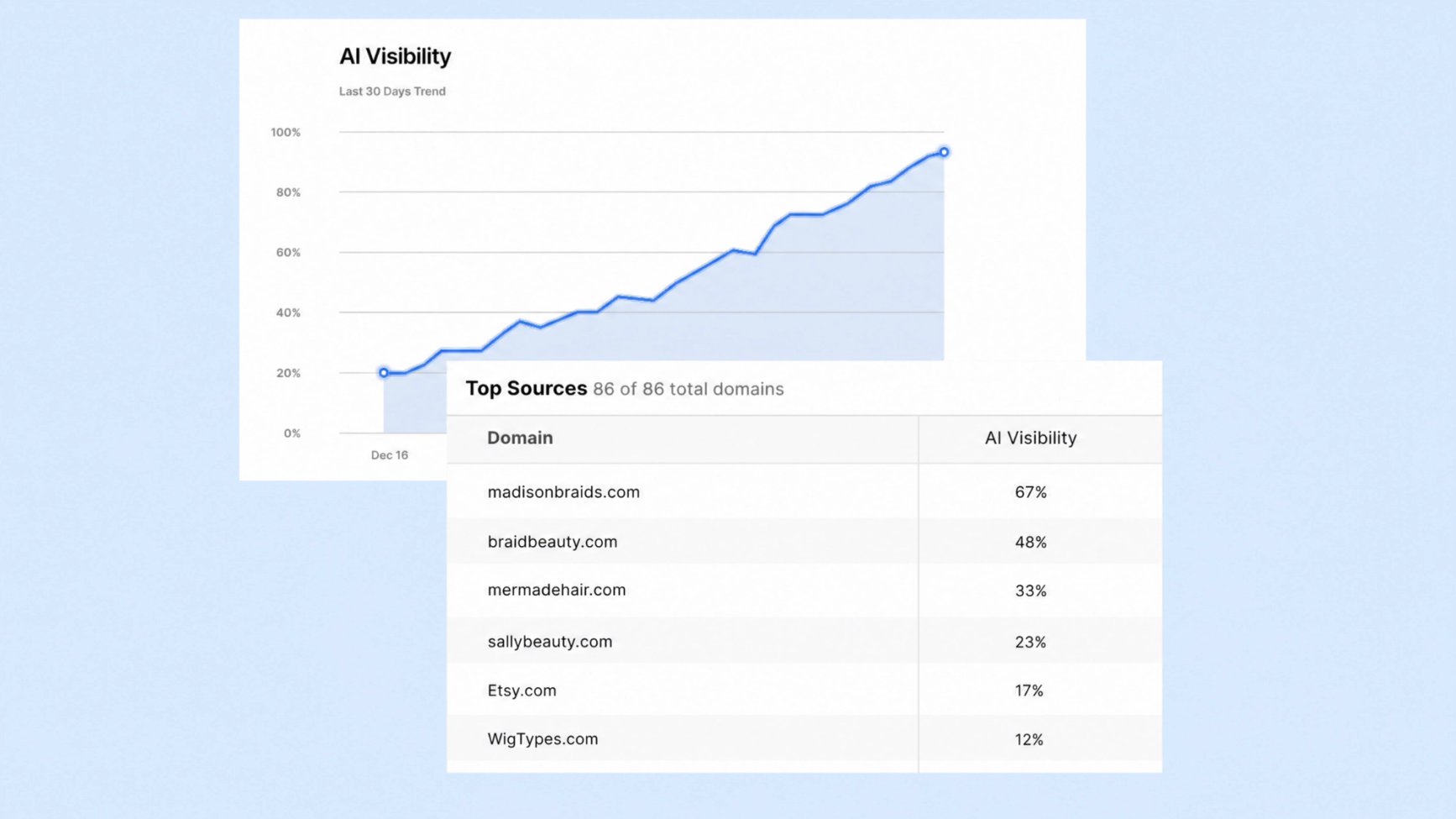
This is an image showing AI visibility trends for the last 30 days trending upward.

Strengths

  • Revenue attribution, not just mentions: Connects AI visibility to real revenue signals. Triple Pixel tracks measurable customer journeys. Post-purchase surveys capture AI influence that referral-click analysis may miss.
  • Cross-channel context: AI visibility sits alongside Meta, Google Ads, TikTok, email, and social data. Teams can compare changes in AI visibility with activity across their other marketing channels.
  • Citation intelligence: Shows which domains earn citations in AI responses, whether owned or third-party, and where they appear within an answer — so teams have a clearer view of where to focus content and PR. 
  • Moby recommendations: Moby analyzes your visibility data. It translates the findings into recommended next steps for content, PR, and other marketing work. 
  • Free to start: Free AI visibility tracking is available for ChatGPT. Broader model coverage and platform capabilities come with paid plans.

Limitations:

  • AI Visibility is newer than some standalone tools built exclusively for GEO. Its biggest advantage is its ecommerce and revenue context. But teams seeking the deepest standalone SEO or AEO research suite may still need complementary tools. Free coverage is also more limited than paid coverage. Plan availability and pricing vary by GMV and account configuration.

Pricing: Free plan available with three paid plans as you scale: Foundation, Automate, and Enterprise
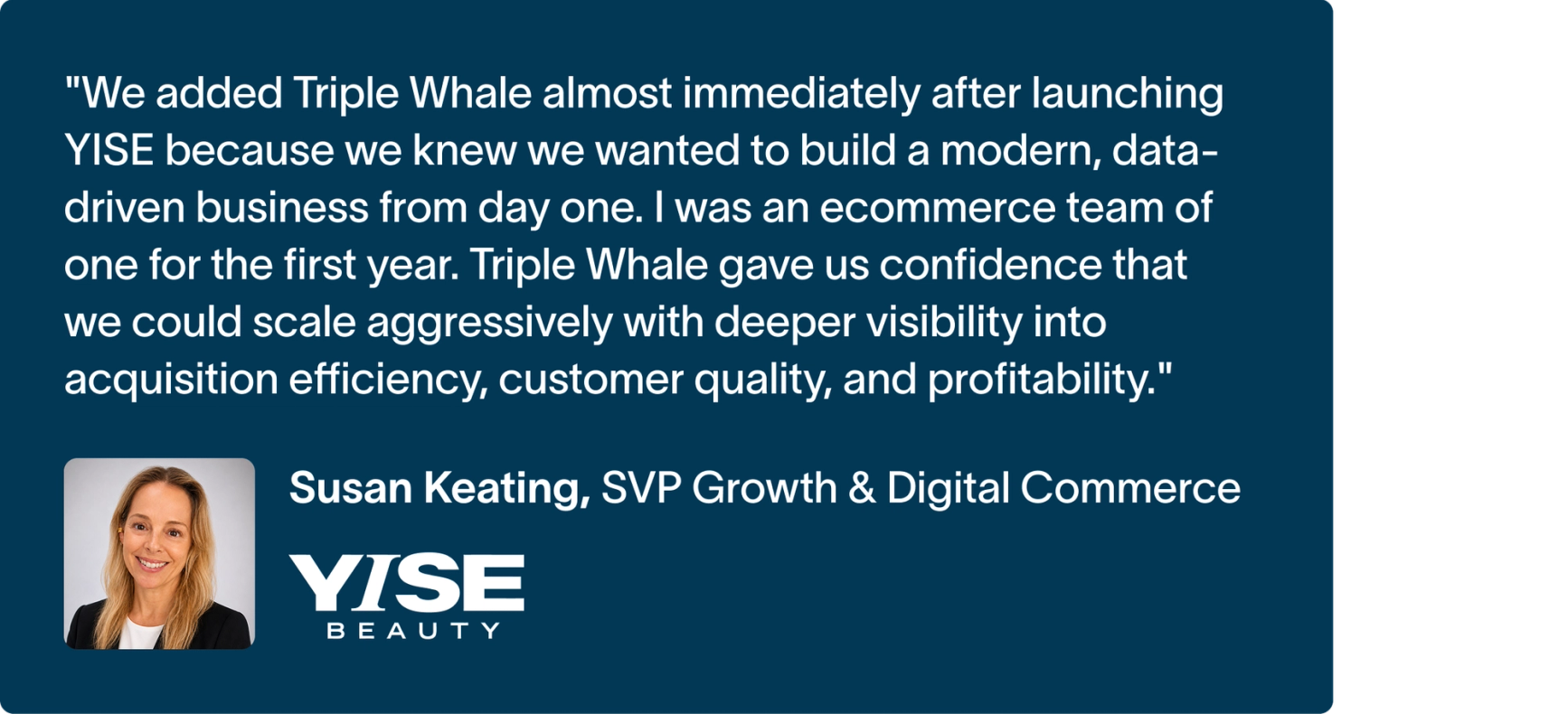
A quote from the SVP at YISE Beauty about how they use Triple Whale and the results that they've seen

Note: YISE Beauty was formerly YSE Beauty.

The AI visibility tool for ecommerce
Book a Demo

2. Profound

What it does: Profound is an enterprise-grade AEO platform that tracks how brands appear across ChatGPT, Claude, Gemini, Perplexity, Google AI Overviews, and more. Its standout feature, Prompt Volumes, shows the real questions people ask AI platforms. Teams can optimize for actual demand rather than guessing.

Best for: Large brands and agencies that need enterprise reporting, SOC 2 compliance, and prompt-demand intelligence.

Strengths:

  • Prompt Volumes gives teams real user-query data most competitors can’t match
  • Broad platform coverage across every major AI engine
  • Built for Fortune 500-scale reporting, with SSO and dedicated strategist support on higher plans

Limitations:

  • The $99/mo entry plan covers ChatGPT only — full multi-platform coverage requires Growth or Enterprise
  • Real-world enterprise deployments commonly run $2,000-$5,000+/mo once you add platforms, seats, and features
  • Limited ecommerce-specific catalog or product-feed tooling compared with operations-aware platforms

Pricing: Starter: $99/mo (ChatGPT, billed annually); Growth: $399/mo (3 answer engines, billed annually); Enterprise: Custom

3. Peec AI

What it does: Peec AI keeps it simple: track visibility across ChatGPT, Perplexity, Google AI Overviews, and DeepSeek, and see which content gets cited. For ecommerce catalogs, its shopping feature tracks individual products in AI shopping results, including win rate and price accuracy. 

Best for: Marketing teams and agencies that want focused AI-search monitoring without wading through an enterprise-grade surface.

Strengths:

  • Clean, fast setup that a non-technical marketer can run without heavy onboarding
  • Unlimited seats on every plan
  • Product-level shopping visibility, including price accuracy versus your live catalog

Limitations:

  • Claude and DeepSeek sit behind Enterprise add-ons rather than the base plans
  • Prompt and answer caps on lower tiers can get tight fast for teams tracking many product queries

Pricing: Starter: $89/mo (50 prompts, annual plan); Pro: $205/mo (150 prompts, annual plan); Advanced: $420/mo (350 prompts, annual plan); Enterprise: Custom

4. Scrunch AI

What it does: Scrunch AI monitors brand visibility across major LLMs. It also analyzes how AI agents actually crawl and interpret your site. Its GA4 integration ties AI referral traffic back to real on-site behavior.

Best for: Enterprise brands and agencies that want AI monitoring wired directly into GA4

Strengths:

  • Strong GA4 integration for connecting AI citations to referral traffic
  • Site audits show how AI crawlers and agents interpret your pages
  • Multi-brand architecture and white-glove onboarding built for agencies managing enterprise clients

Limitations:

  • One of the more expensive entry points in the category
  • Setup is labor-intensive — get prompts and competitors wrong and your data skews immediately

Pricing: Core: $250/mo (125 prompts); Agency Core: $500/mo ($250 prompts); Enterprise: Custom

5. Otterly.ai

What it does: Otterly.ai is the accessible entry point into AI visibility tracking. It covers ChatGPT, Google AI Overviews, Perplexity, and Microsoft Copilot out of the box, and  turns every prompt result into a Brand Visibility Index. You can watch your standing shift over time instead of eyeballing raw answers.

Best for: Small teams, solo marketers, and agencies that want to start tracking AI visibility without a big budget commitment

Strengths:

  • One of the most affordable credible entry points in the category, with transparent, published pricing
  • Unlimited team members and daily tracking on every plan, including the cheapest tier
  • Tracking of four AI search engines on the cheapest plan

Limitations:

  • Gemini, Google AI Mode, and Claude are priced as add-ons rather than included in core plans
  • The price jump from Lite (15 prompts) to Standard (100 prompts) is a 6x increase
  • No traffic-attribution or native ecommerce catalog features

Pricing: Lite: $29/mo (15 prompts), Standard: $189/mo (100 prompts), Premium: $489/mo (400 search prompts), and Enterprise: Custom

6. Semrush

What it does: Semrush folds AI visibility into the SEO suite most teams already use. It tracks brand mentions and citations across ChatGPT, Perplexity, Google AI Overviews, and Gemini. Reports sit next to the keyword, backlink, and site-audit data you already pull for classic SEO.

Best for: SEO teams that want AI-search visibility without adopting an entirely new platform or workflow

Strengths:

  • One dashboard for both classic SEO and AI-search visibility, useful for unified reporting
  • Familiar interface for any team already running Semrush for keyword and backlink work
  • The Semrush plans that bundle SEO + AI Search can be cheaper than buying a core SEO plan and a specialist AEO tool separately
  • Offers a separate plan for SEO and three plans that incorporate AI

Limitations:

  • AI search prompts are more limited compared to others on the list
  • Additional price to add users to each plan

Pricing: Starter (SEO + AI Search): $165.17 (50 prompts); Pro+ (SEO + AI Search): $248.17 (100 prompts); Advanced (SEO + AI Search): $455.67 (200 prompts)

7. Ahrefs

What it does: Ahrefs built Brand Radar AI on its existing web and keyword index. It tracks how often your brand appears in AI answers and who shows up instead. You can research any brand across 470 million organic prompts from the Ahrefs database and track your own AI prompts.

Best for: SEO teams already living inside Ahrefs who want AI mention tracking layered on the index and backlink data they already trust

Strengths:

  • Massive underlying prompt and web index gives Brand Radar AI unusually well-grounded demand data
  • Retains AI visibility data over time, giving you real historical trends
  • Custom prompt packages available with three package tiers: Basic, Growth, and Scale

Limitations:

  • Pricing stacks fast: a required Ahrefs base plan plus Brand Radar AI fees can total over $600
  • Prompt-check ceilings get consumed quickly once you track more than a handful of queries across every engine
  • Built as an SEO-suite add-on first, so ecommerce-specific product or catalog features are limited

Pricing: Brand Radar AI starts at $199/mo with an already existing base plan; Custom prompt packages are also available with Basic: $50/mo (2,500 checks/mo), Growth: $100/mo (7,000 checks/mo), and Scale: $250/mo (25,000 checks/mo)

8. ZipTie

What it does: ZipTie tracks brand mentions and citations across Google AI Overviews, ChatGPT, and Perplexity. It uses real-browser monitoring instead of API simulation, so what you see matches what shoppers actually see. Its standout piece is the content optimization module, which turns a visibility gap into a specific, page-level brief telling you what to change and where.

Best for: Lean marketing and content teams that want a focused three-engine tracker paired with clear, page-level fixes

Strengths:

  • Real-browser monitoring captures the exact answer text a shopper would see
  • Content optimization briefs translate a visibility gap into a page-level fix
  • Track brand performance to see how your company is presented in AI Search and how to improve it

Limitations:

  • Only covers three search engines, with no native Claude, Gemini, or Copilot tracking
  • Standard plans are capped at a single seat
  • Entry-tier content optimization credits may run out quickly for a brand managing a wide catalog

Pricing: Basic: $69/mo (500 checks/mo); Standard: $99/mo (1,000 checks/mo); Pro: $159/mo (2,000 checks/mo)

How to choose the right AI visibility tool for your needs

The eight tools above have different approaches. So, the best choice depends on what fits your team, budget, and catalog. Here are some factors to think about before you commit:

  • Platform coverage: Find out what AI search engines your buyers care about. You can then check whether the plan you’re interested in includes them. Several tools gate Gemini, Claude, or Google AI Mode behind add-ons or higher tiers.
  • Promp/query tracking depth: Having more prompts gives you a better view of your presence across your product range. A handful of prompts might work for a single-category brand; a broad catalog needs more room to track.
  • Citation and share-of-voice tracking: Look for tools that show the sources AI platforms cite. Don’t just check if you were mentioned. Knowing the source lets you fix it. 
  • Content recommendations: A dashboard that only reports gaps leaves the fixing to you. The stronger tools point to specific pages, feeds, or sources to improve.
  • Ecommerce integrations: Feed integrations, GA4 connections, and product-level shopping data matter more the bigger your catalog gets. General brand-monitoring tools often skip this entirely.
  • Pricing and seasonality: Prices can rise during peak season as you monitor more products and competitors. Model your cost at your busiest month, not your average one. 

How these tools fit into your ecommerce strategy

AI visibility tools aren’t a replacement for the fundamentals — they’re a new layer on top of them.

  • Content still matters. AI platforms cite pages the same way search engines do. Clear, well-structured content on your site and in trusted third-party sources still drives whether you get mentioned.
  • Structured data and product feeds help. Clean schema markup and accurate, complete product feeds make it easier for AI systems to parse what you sell and recommend it correctly.
  • AI visibility isn’t just SEO — operations signals matter too. Price accuracy, stock status, and shipping details increasingly factor into whether an AI shopping agent recommends your product. Get your operations data as clean as your content.

Conclusion

AI search isn’t a future problem to plan for later. It’s already reshaping how shoppers find products today. The brands that show up in those answers earn consideration before a shopper ever lands on a website. The ones left out simply don’t get a chance.

Start by picking the AI visibility tool that aligns with how your team already works. Go with a dedicated AEO platform if AI search is a standalone priority. Choose an SEO suite add-on if you want it folded into existing workflows. Or pick an e-commerce first option if you need visibility tied directly to revenue and product data.

For ecommerce brands that want AI visibility tied to business outcomes, Triple Whale offers an ecommerce-first approach. Triple Whale connects how your brand and products appear in AI-generated answers with the product, customer, and revenue data your team already uses. That turns visibility into clear, measurable action. Book a demo with Triple Whale today!

Try Triple Whale Today
Book a Demo

AI visibility tools for ecommerce: FAQs

What is AI visibility?

AI visibility is how often, and how accurately, your brand or products appear in AI search answers. Think ChatGPT and similar platforms. It covers whether you’re mentioned, which sources get cited, how you’re described, and how you compare with competitors.

Which AI platforms matter most for ecommerce visibility?

ChatGPT, Google AI Overviews, and Perplexity currently drive the most ecommerce-relevant traffic and product research. Check which platforms your buyers actually use before picking a tool — coverage varies a lot between vendors.

Can AI visibility tools integrate with my existing SEO or ecommerce tech stack?

Many can. SEO-suite options like Ahrefs plug straight into tools you likely already use. Ecommerce-focused options like Triple Whale integrate with platforms such as Shopify, PIM systems, and product feeds. Always confirm integration depth before buying, as some tools only support surface-level connections.
Component Sales
5.32K
Artificial Intelligence

Best AI Visibility and Optimization Tools for Ecommerce: How to Choose

Last Updated: 
August 18, 2026
This is the cover image of the blog post that says "Best AI Visibility and Optimization Tools."

If a shopper asked ChatGPT for running shoes under $120, would your brand show up?

AI search is changing how shoppers find products. They get a quick list of options with fast shipping before ever heading to a store. Brands left out of that answer may never be considered.

Traditional tools miss that visibility. The Pew Research Center studied around 70,000 Google searches and found an 8% click rate when an AI summary appeared. This was lower than the 15% click rate when there was no summary. If the shopper never reaches your site, GA4 records no clicks or sessions, and no lost sales.

This guide looks at tools that track and enhance AI visibility. It compares AEO/GEO specific tools, SEO platforms with AI features, and ecommerce-focused platforms.

quote

Key takeaways:
  • AI visibility tools measure what happens inside the answer. They track brand mentions, citations, product results, sentiment, and share of voice. This is the data traffic reports often miss.
  • Your workflow should guide your choice. Dedicated AEO and GEO tools dig deeper. SEO suites bolt AI tracking onto tools your team already runs. 
  • Product details matter. Look for catalog imports, pricing, availability, retailer links, product feeds, and shopping-results data. 
  • Tracking should lead to action. A good tool should find weak pages, missing topics, source gaps, and product feed issues your team can fix.
  • AI visibility isn’t revenue attribution. Use these tools to find visibility gaps. Then, dive into ecommerce analytics to track visits, customers, and sales.

What are AI visibility tools for ecommerce?

AI visibility tools show how often a brand or product appears, gets cited, and is described in AI-generated answers. They use prompts to gather answers, then compare brands and track sources. They also flag gaps in your content or product data.

For example, a skincare brand may track phrases like “best face cream for dry skin” or “CeraVe alternatives under $30.” The tool shows which brands appear first, get cited, and whether product details are accurate. 

You may also see these terms:

  • Answer Engine Optimization (AEO)
  • Generative Engine Optimization (GEO)
  • Large language model (LLM) visibility

The labels may vary, but the goal is clear: help AI systems find, understand, trust, and recommend your brand.

AI visibility tools vs. analytics tools

AI visibility tools and analytics tools answer different questions. Visibility tools measure whether AI platforms mention, cite, or recommend your brand. Analytics tools measure what happens after a shopper reaches your site. Most ecommerce teams need both.

Question AI Visibility Tool Analytics and Reporting Tools
Did the brand or product appear in the AI answer? Yes Usually not without a click
Which sources did the answer cite? Yes Usually not
How did the answer describe the brand? Often, through sentiment and accuracy monitoring No
Which competitors appeared for the same prompt? Yes Usually not
Did the shopper visit, convert, or generate revenue? Limited or indirect Yes
Can the tool attribute revenue to AI discovery? Usually limited Better suited to traffic, conversion, and revenue measurement

Core capabilities to expect

Most tools cover the same basics. The best ones go further. They show you where your brand appears, explain what shapes the answer, and guide your next move. Here’s what to expect:

  • Prompt tracking: Run the same buyer questions across selected AI platforms, locations, and dates
  • Brand tracking: Show whether your brand appears, how often it appears, and where it ranks in the answer
  • Product tracking: Follow products, SKUs, prices, retailers, and shopping results when available on the platform
  • Citation tracking: Display the pages, forums, videos, stores, or publishers an AI answer cites
  • Share of voice: Compare your brand with named competitors across the same prompt set
  • Sentiment and accuracy checks: Flag outdated, incorrect, or negative descriptions of your brand
  • Content gap analysis: Find topics where competitors appear but your brand does not
  • Optimization guidance: Suggest changes to pages, guides, product data, feeds, or technical setup
  • Multi-platform coverage: Look at the results. ChatGPT, Gemini, Perplexity, and Google can all give different answers.

The strongest tools help explain why a competitor wins. Maybe it’s strong content, better product data, or more trusted outside sources.

Why traditional SEO tools fall short for AI search

Traditional SEO tools track rankings, impressions, and clicks. Those numbers still matter — they just don’t show what’s inside an AI answer.

  • AI answers are not clicks. A shopper can receive a product shortlist without visiting a website
  • Traditional tools measure traffic, not citations. An unclicked brand mention or recommendation may never appear in an analytics report
  • Being crawled is not the same as being cited. An indexed product page may still be absent from the answer

AI visibility tools bridge the gap between being online and showing up in AI-generated answers.

Types of AI visibility tools for ecommerce

AI visibility tools come in three main groups:

  • Tools made specifically for AI search
  • Add-ons for current SEO platforms
  • Ecommerce tools that monitor how products show up in shopping results

The right choice depends on what your team needs most.

AEO- and GEO-focused tools

AEO and GEO tools exist to answer one question: How does your brand show up when shoppers ask AI what to buy? They show which prompts get mentioned, which sources are cited, and how your brand is described. These tools also look at how your competitors show up. 

  • What they are: Dedicated platforms for tracking and improving visibility inside AI-generated answers
  • Most useful for: Teams running a focused AEO or GEO program across several answer engines, topics, locations, or client accounts
  • Main limitation: Many focus on content and citation analysis. They offer little in terms of catalog, inventory, product feed, or revenue context. 

SEO platforms with AI features

Established SEO platforms are folding AI visibility into the tools your organic search team already uses. AI mentions and citations join familiar data like keywords, backlinks, content, and site audits. This gives you a complete picture without adding any new workflows to learn.

  • What they are: SEO suites with added AI visibility, citation, and prompt-tracking features
  • Most useful for: SEO teams that want traditional search and AI-search data in one platform
  • Main limitation: AI features may be separate add-ons, have lower prompt limits, or offer less depth than a dedicated platform

Ecommerce-focused or operations-aware tools

AI shopping agents don’t recommend products on content alone. They also check if your prices, availability, and product details are correct and easy to read. Ecommerce-focused tools find and fix the catalog-level gaps that can keep a product out of the recommendation entirely.

  • What they are: Platforms that connect AI visibility with product appearances, shopping results, product feeds, or ecommerce integrations
  • Most useful for: Brands that need to know which products AI systems recommend and which sellers receive the link
  • Main limitation: Product-level shopping coverage may support fewer AI platforms than general brand tracking

What to know about Triple Whale: Triple Whale is the only e-commerce-focused option on this list. It tracks brand mentions, source citations, and competitor visibility across AI-generated answers, then ties it back to revenue.

How we selected and evaluated these tools

Not every platform with an “AI visibility” label made the cut. We looked at product documents, pricing, platform coverage, and integrations. We focused on dedicated trackers, SEO suites, and ecommerce tools. This helped us find eight options that fit different budgets and needs.

We also build an AI invisibility tool for ecommerce brands, right inside Triple Whale. So we’re not coming at this list from the outside. We’ve worked with brands who started their AEO journey with us. That gives us a real, first-hand read on what’s gaining traction and what isn’t.

A quick note: none of the tools on this list paid to be included. Also, none are sponsors or partners of Triple Whale unless we state otherwise.

The best AI visibility tools for ecommerce

The eight options we chose offer unique approaches to AI visibility. Scan the table for a quick read, then dig into strengths, limitations, and pricing below.

Tool Category Best For Pricing
Triple Whale Ecommerce-focused AEO/GEO Ecommerce teams tracking AI mentions, citations, and competitor visibility Free plan available, plus three other plans offered as you grow: Foundation, Automate, and Enterprise
Profound AEO/GEO-focused (enterprise) Enterprise brands that need deep AI-answer reporting, prompt-demand data, and Fortune 500-grade compliance Started: $99/mo (ChatGPT only); Growth: $399/mo (3 engines, 100 prompts); Enterprise: Custom pricing
Peec AI AEO/GEO-focused Marketing teams that want clean, focused AI-search monitoring without enterprise complexity Started: $80/mo (50 prompts); Pro: $205/mo (150 prompts, 3 models); Advanced from $420 (350 prompts, 3 models); Enterprise: Custom pricing
Scrunch AI AEO/GEO-focused (enterprise) Enterprise brands and agencies that need GA4-linked AI traffic data and site-level agent audits Core: $250/mo (150 prompts); Agency Core: $500/mo (250 prompts); Enterprise: Custom pricing
Otterly.ai AEO/GEO-focused Small teams and agencies that want an affordable way to start tracking AI visibility Lite: $29/mo (15 prompts); Standard: $189/mo (100 prompts); Premium: $489 (400 prompts); Enterprise: Custom pricing
SEMRush SEO Platform with AI Features SEO teams that want AI visibility tracking alongside the keyword, backlink, and audit tools they already use Starter (SEO + AI Search): $165.17 (50 prompts); Pro+ (SEO + AI Search): $248.17 (100 prompts); Advanced (SEO + AI Search): $455.67 (200 prompts)
Ahrefs SEO Platform with AI Features SEO teams already living in Ahrefs who want AI mention tracking layered on their existing index Brand Radar AI: $199/mo (with required base plan); Custom prompt packages: Basic ($50/mo, 2,500 checks/mo), Growth ($100/mo, 7,000 checks/mo), and Scale ($250/mo, 25,000 checks/mo)
ZipTie AEO/GEO-focused Lean teams that want a focused three-engine tracker with page-level content fixes built in Basic: $69/mo (500 checks/mo); Standard: $99/mo (1,000 checks/mo); Pro: $159/mo (2,000 checks/mo)

1. Triple Whale

What it does: Triple Whale stands out by connecting AI visibility directly to ecommerce revenue signals. It’s not just a standalone monitoring tool. It’s part of a complete ecommerce intelligence stack that includes attribution, paid media, retention, and customer journey data. This means mention rate, citation tracking, and share of voice sit right alongside the orders, ad spend, and revenue data teams are already watching.

Best for: Shopify brands and DTC operators who want AI visibility data linked to measurable revenue outcomes

This is an image showing AI visibility trends for the last 30 days trending upward.

Strengths

  • Revenue attribution, not just mentions: Connects AI visibility to real revenue signals. Triple Pixel tracks measurable customer journeys. Post-purchase surveys capture AI influence that referral-click analysis may miss.
  • Cross-channel context: AI visibility sits alongside Meta, Google Ads, TikTok, email, and social data. Teams can compare changes in AI visibility with activity across their other marketing channels.
  • Citation intelligence: Shows which domains earn citations in AI responses, whether owned or third-party, and where they appear within an answer — so teams have a clearer view of where to focus content and PR. 
  • Moby recommendations: Moby analyzes your visibility data. It translates the findings into recommended next steps for content, PR, and other marketing work. 
  • Free to start: Free AI visibility tracking is available for ChatGPT. Broader model coverage and platform capabilities come with paid plans.

Limitations:

  • AI Visibility is newer than some standalone tools built exclusively for GEO. Its biggest advantage is its ecommerce and revenue context. But teams seeking the deepest standalone SEO or AEO research suite may still need complementary tools. Free coverage is also more limited than paid coverage. Plan availability and pricing vary by GMV and account configuration.

Pricing: Free plan available with three paid plans as you scale: Foundation, Automate, and Enterprise

A quote from the SVP at YISE Beauty about how they use Triple Whale and the results that they've seen

Note: YISE Beauty was formerly YSE Beauty.

The AI visibility tool for ecommerce
Book a Demo

2. Profound

What it does: Profound is an enterprise-grade AEO platform that tracks how brands appear across ChatGPT, Claude, Gemini, Perplexity, Google AI Overviews, and more. Its standout feature, Prompt Volumes, shows the real questions people ask AI platforms. Teams can optimize for actual demand rather than guessing.

Best for: Large brands and agencies that need enterprise reporting, SOC 2 compliance, and prompt-demand intelligence.

Strengths:

  • Prompt Volumes gives teams real user-query data most competitors can’t match
  • Broad platform coverage across every major AI engine
  • Built for Fortune 500-scale reporting, with SSO and dedicated strategist support on higher plans

Limitations:

  • The $99/mo entry plan covers ChatGPT only — full multi-platform coverage requires Growth or Enterprise
  • Real-world enterprise deployments commonly run $2,000-$5,000+/mo once you add platforms, seats, and features
  • Limited ecommerce-specific catalog or product-feed tooling compared with operations-aware platforms

Pricing: Starter: $99/mo (ChatGPT, billed annually); Growth: $399/mo (3 answer engines, billed annually); Enterprise: Custom

3. Peec AI

What it does: Peec AI keeps it simple: track visibility across ChatGPT, Perplexity, Google AI Overviews, and DeepSeek, and see which content gets cited. For ecommerce catalogs, its shopping feature tracks individual products in AI shopping results, including win rate and price accuracy. 

Best for: Marketing teams and agencies that want focused AI-search monitoring without wading through an enterprise-grade surface.

Strengths:

  • Clean, fast setup that a non-technical marketer can run without heavy onboarding
  • Unlimited seats on every plan
  • Product-level shopping visibility, including price accuracy versus your live catalog

Limitations:

  • Claude and DeepSeek sit behind Enterprise add-ons rather than the base plans
  • Prompt and answer caps on lower tiers can get tight fast for teams tracking many product queries

Pricing: Starter: $89/mo (50 prompts, annual plan); Pro: $205/mo (150 prompts, annual plan); Advanced: $420/mo (350 prompts, annual plan); Enterprise: Custom

4. Scrunch AI

What it does: Scrunch AI monitors brand visibility across major LLMs. It also analyzes how AI agents actually crawl and interpret your site. Its GA4 integration ties AI referral traffic back to real on-site behavior.

Best for: Enterprise brands and agencies that want AI monitoring wired directly into GA4

Strengths:

  • Strong GA4 integration for connecting AI citations to referral traffic
  • Site audits show how AI crawlers and agents interpret your pages
  • Multi-brand architecture and white-glove onboarding built for agencies managing enterprise clients

Limitations:

  • One of the more expensive entry points in the category
  • Setup is labor-intensive — get prompts and competitors wrong and your data skews immediately

Pricing: Core: $250/mo (125 prompts); Agency Core: $500/mo ($250 prompts); Enterprise: Custom

5. Otterly.ai

What it does: Otterly.ai is the accessible entry point into AI visibility tracking. It covers ChatGPT, Google AI Overviews, Perplexity, and Microsoft Copilot out of the box, and  turns every prompt result into a Brand Visibility Index. You can watch your standing shift over time instead of eyeballing raw answers.

Best for: Small teams, solo marketers, and agencies that want to start tracking AI visibility without a big budget commitment

Strengths:

  • One of the most affordable credible entry points in the category, with transparent, published pricing
  • Unlimited team members and daily tracking on every plan, including the cheapest tier
  • Tracking of four AI search engines on the cheapest plan

Limitations:

  • Gemini, Google AI Mode, and Claude are priced as add-ons rather than included in core plans
  • The price jump from Lite (15 prompts) to Standard (100 prompts) is a 6x increase
  • No traffic-attribution or native ecommerce catalog features

Pricing: Lite: $29/mo (15 prompts), Standard: $189/mo (100 prompts), Premium: $489/mo (400 search prompts), and Enterprise: Custom

6. Semrush

What it does: Semrush folds AI visibility into the SEO suite most teams already use. It tracks brand mentions and citations across ChatGPT, Perplexity, Google AI Overviews, and Gemini. Reports sit next to the keyword, backlink, and site-audit data you already pull for classic SEO.

Best for: SEO teams that want AI-search visibility without adopting an entirely new platform or workflow

Strengths:

  • One dashboard for both classic SEO and AI-search visibility, useful for unified reporting
  • Familiar interface for any team already running Semrush for keyword and backlink work
  • The Semrush plans that bundle SEO + AI Search can be cheaper than buying a core SEO plan and a specialist AEO tool separately
  • Offers a separate plan for SEO and three plans that incorporate AI

Limitations:

  • AI search prompts are more limited compared to others on the list
  • Additional price to add users to each plan

Pricing: Starter (SEO + AI Search): $165.17 (50 prompts); Pro+ (SEO + AI Search): $248.17 (100 prompts); Advanced (SEO + AI Search): $455.67 (200 prompts)

7. Ahrefs

What it does: Ahrefs built Brand Radar AI on its existing web and keyword index. It tracks how often your brand appears in AI answers and who shows up instead. You can research any brand across 470 million organic prompts from the Ahrefs database and track your own AI prompts.

Best for: SEO teams already living inside Ahrefs who want AI mention tracking layered on the index and backlink data they already trust

Strengths:

  • Massive underlying prompt and web index gives Brand Radar AI unusually well-grounded demand data
  • Retains AI visibility data over time, giving you real historical trends
  • Custom prompt packages available with three package tiers: Basic, Growth, and Scale

Limitations:

  • Pricing stacks fast: a required Ahrefs base plan plus Brand Radar AI fees can total over $600
  • Prompt-check ceilings get consumed quickly once you track more than a handful of queries across every engine
  • Built as an SEO-suite add-on first, so ecommerce-specific product or catalog features are limited

Pricing: Brand Radar AI starts at $199/mo with an already existing base plan; Custom prompt packages are also available with Basic: $50/mo (2,500 checks/mo), Growth: $100/mo (7,000 checks/mo), and Scale: $250/mo (25,000 checks/mo)

8. ZipTie

What it does: ZipTie tracks brand mentions and citations across Google AI Overviews, ChatGPT, and Perplexity. It uses real-browser monitoring instead of API simulation, so what you see matches what shoppers actually see. Its standout piece is the content optimization module, which turns a visibility gap into a specific, page-level brief telling you what to change and where.

Best for: Lean marketing and content teams that want a focused three-engine tracker paired with clear, page-level fixes

Strengths:

  • Real-browser monitoring captures the exact answer text a shopper would see
  • Content optimization briefs translate a visibility gap into a page-level fix
  • Track brand performance to see how your company is presented in AI Search and how to improve it

Limitations:

  • Only covers three search engines, with no native Claude, Gemini, or Copilot tracking
  • Standard plans are capped at a single seat
  • Entry-tier content optimization credits may run out quickly for a brand managing a wide catalog

Pricing: Basic: $69/mo (500 checks/mo); Standard: $99/mo (1,000 checks/mo); Pro: $159/mo (2,000 checks/mo)

How to choose the right AI visibility tool for your needs

The eight tools above have different approaches. So, the best choice depends on what fits your team, budget, and catalog. Here are some factors to think about before you commit:

  • Platform coverage: Find out what AI search engines your buyers care about. You can then check whether the plan you’re interested in includes them. Several tools gate Gemini, Claude, or Google AI Mode behind add-ons or higher tiers.
  • Promp/query tracking depth: Having more prompts gives you a better view of your presence across your product range. A handful of prompts might work for a single-category brand; a broad catalog needs more room to track.
  • Citation and share-of-voice tracking: Look for tools that show the sources AI platforms cite. Don’t just check if you were mentioned. Knowing the source lets you fix it. 
  • Content recommendations: A dashboard that only reports gaps leaves the fixing to you. The stronger tools point to specific pages, feeds, or sources to improve.
  • Ecommerce integrations: Feed integrations, GA4 connections, and product-level shopping data matter more the bigger your catalog gets. General brand-monitoring tools often skip this entirely.
  • Pricing and seasonality: Prices can rise during peak season as you monitor more products and competitors. Model your cost at your busiest month, not your average one. 

How these tools fit into your ecommerce strategy

AI visibility tools aren’t a replacement for the fundamentals — they’re a new layer on top of them.

  • Content still matters. AI platforms cite pages the same way search engines do. Clear, well-structured content on your site and in trusted third-party sources still drives whether you get mentioned.
  • Structured data and product feeds help. Clean schema markup and accurate, complete product feeds make it easier for AI systems to parse what you sell and recommend it correctly.
  • AI visibility isn’t just SEO — operations signals matter too. Price accuracy, stock status, and shipping details increasingly factor into whether an AI shopping agent recommends your product. Get your operations data as clean as your content.

Conclusion

AI search isn’t a future problem to plan for later. It’s already reshaping how shoppers find products today. The brands that show up in those answers earn consideration before a shopper ever lands on a website. The ones left out simply don’t get a chance.

Start by picking the AI visibility tool that aligns with how your team already works. Go with a dedicated AEO platform if AI search is a standalone priority. Choose an SEO suite add-on if you want it folded into existing workflows. Or pick an e-commerce first option if you need visibility tied directly to revenue and product data.

For ecommerce brands that want AI visibility tied to business outcomes, Triple Whale offers an ecommerce-first approach. Triple Whale connects how your brand and products appear in AI-generated answers with the product, customer, and revenue data your team already uses. That turns visibility into clear, measurable action. Book a demo with Triple Whale today!

Try Triple Whale Today
Book a Demo

AI visibility tools for ecommerce: FAQs

What is AI visibility?

AI visibility is how often, and how accurately, your brand or products appear in AI search answers. Think ChatGPT and similar platforms. It covers whether you’re mentioned, which sources get cited, how you’re described, and how you compare with competitors.

Which AI platforms matter most for ecommerce visibility?

ChatGPT, Google AI Overviews, and Perplexity currently drive the most ecommerce-relevant traffic and product research. Check which platforms your buyers actually use before picking a tool — coverage varies a lot between vendors.

Can AI visibility tools integrate with my existing SEO or ecommerce tech stack?

Many can. SEO-suite options like Ahrefs plug straight into tools you likely already use. Ecommerce-focused options like Triple Whale integrate with platforms such as Shopify, PIM systems, and product feeds. Always confirm integration depth before buying, as some tools only support surface-level connections.
Emily Kordys

Emily is a Content Writer at Triple Whale, where she creates data-driven content for ecommerce marketers. She has spent nearly a decade in content marketing across the B2B SaaS and ecommerce industries, helping brands turn complex topics into engaging, actionable content.

Body Copy: The following benchmarks compare advertising metrics from April 1-17 to the previous period. Considering President Trump first unveiled 
his tariffs on April 2, the timing corresponds with potential changes in advertising behavior among ecommerce brands (though it isn’t necessarily correlated).

Ready to make confident, data-driven decisions faster than ever?

Thank you! Your submission has been received!
Oops! Something went wrong while submitting the form.