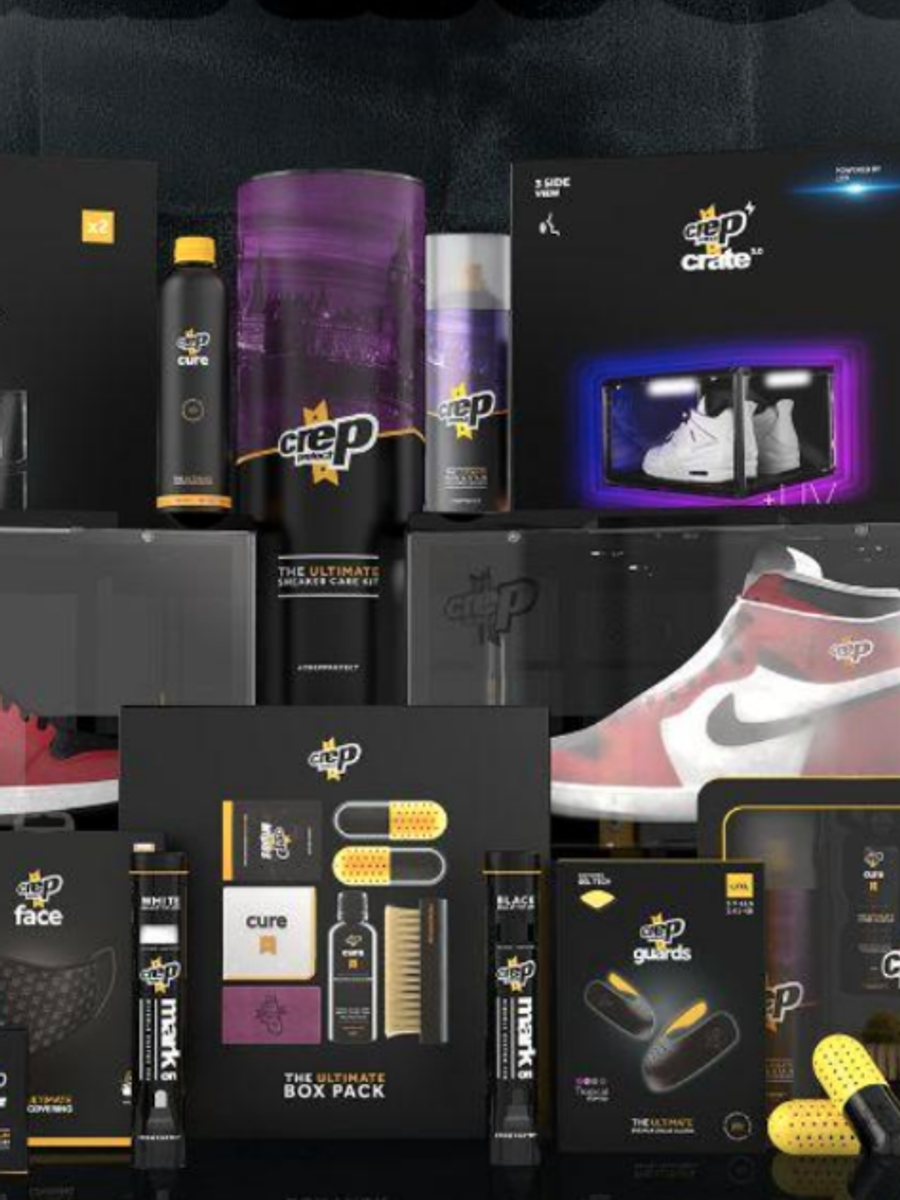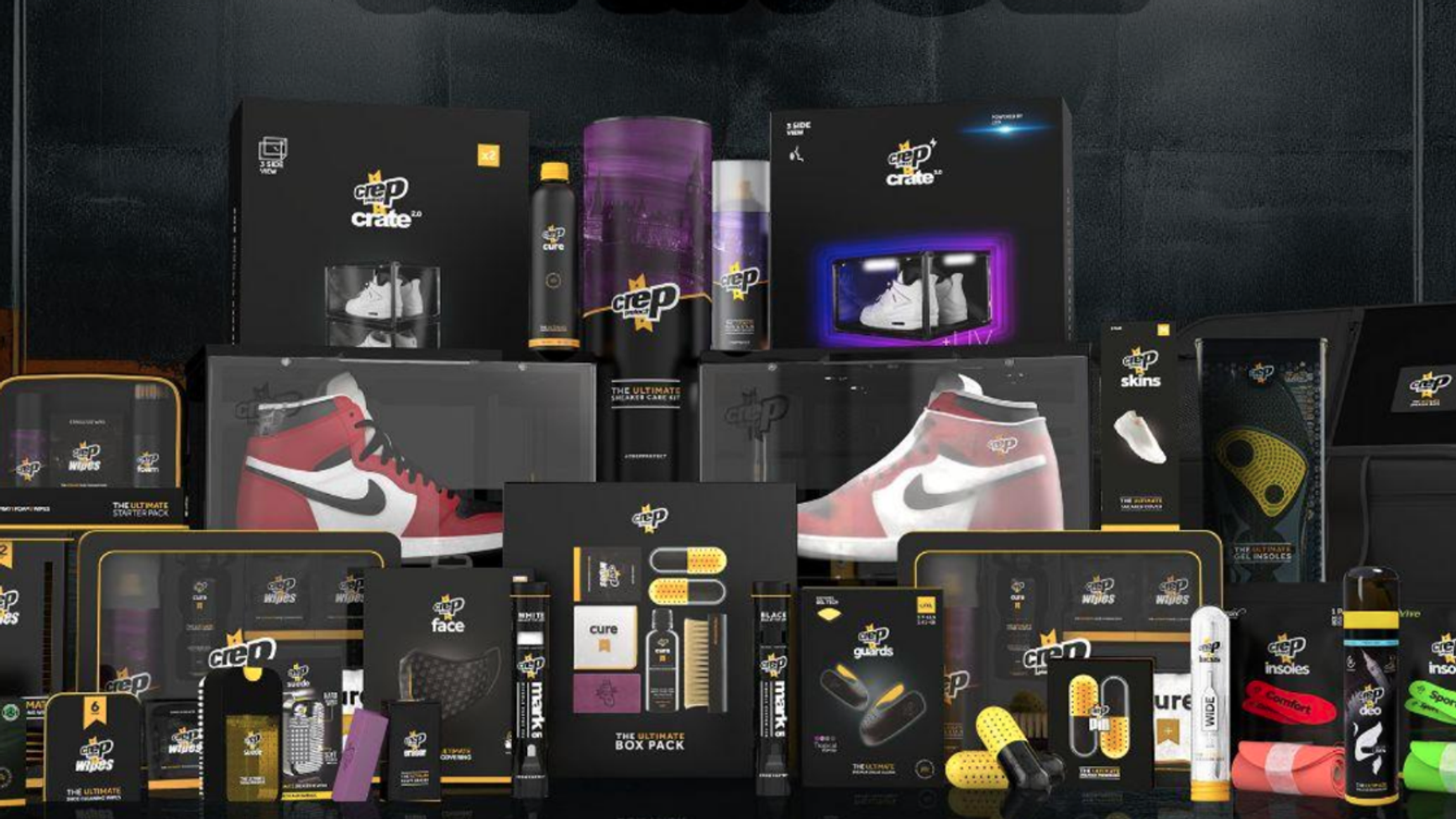
Crep Protect is the world’s leading premium sneaker & footwear care brand selling everything from cleaning kits to rain and stain repellents across more than 50 countries.
Founded in 2012 as a retail-first company, the London-based brand saw early growth through partnerships with major brick-and-mortar retailers. But when ecommerce took off, the brand faced a new challenge: finding a scalable digital marketing infrastructure to support explosive online growth.
Years of retail-first operations meant their e-commerce data had not been effectively utilized. Crep Protect was running ad budgets across Google and Meta, but lacked the historical foundation to understand what actually drove results. Operating three Shopify stores across different regions while managing a single ad account per channel also created measurement challenges that standard attribution couldn't solve.
To scale effectively and drive measurable growth, Crep Protect turned to Triple Whale to finally understand which marketing investments were actually driving results.
Challenges
When Paid Media Manager Simona Bittalova joined Crep Protect, the team had limited visibility into performance. Budgets were divided between Google and Meta, though it wasn’t entirely clear whether this approach was the most effective.
Simona and the Crep Protect team faced critical obstacles, including:
- No historical foundation: The team had no way to identify patterns, test hypotheses, or learn from past campaigns. Every decision felt like starting from scratch.
- Unclear channel performance: With spend across both Meta and Google, the team had no reliable way to know which channels were truly creating demand versus simply capturing it. Channel performance was a blind spot.
- Multi-market complexity: Three regional stores funneling through single ad accounts per platform meant no attribution model could accurately assign credit or guide budget decisions across markets.
The team needed more than just better reporting, they needed a systematic approach to measurement that could handle their complexity and deliver answers fast.
"Crep Protect is an established company that built its success through retail, so as ecommerce became a bigger priority, we had a huge opportunity to organize our data in a way that would help us scale effectively and make smarter decisions moving forward.
— Simona Bittalova, Paid Media Manager, Crep Protect
Solution
Simona took a methodical approach to solving Crep Protect's measurement puzzle, using multiple Triple Whale tools to build a complete picture of what was actually working.
Establishing a baseline with Post-Purchase Surveys
The team started with Triple Whale's Post-Purchase Survey (PPS) to ask customers directly how they discovered Crep Protect. The results immediately challenged assumptions: very few new customers reported finding the brand through Google, contradicting what the team believed about their acquisition channels.
Validating with Incrementality Testing
Rather than immediately restructuring budgets based on survey data alone, the team ran an incrementality test to validate the findings. They reduced Google Performance Max (PMAX) spend in the US market for two weeks while keeping all other variables constant, then analyzed results against the previous two weeks and prior year trends.
The results were glaring: total US sales showed no change despite the reduction in Google spend. The team replicated the test in the UK and Europe with similar results: Google wasn't driving the incremental growth they'd assumed.
"We started with a post-purchase survey and noticed that not many new customers discovered us on Google. So we ran a small incrementality test in the U.S. and found there was no change in our total sales. We tested this in the rest of the markets with the same result. Based on this, we redistributed spend from Google to Meta," says Simona.
Implementing attribution and MMM for ongoing optimization
With incrementality testing confirming that their budget allocation was off, Simona implemented Triple Whale's Marketing Mix Modeling (MMM) as a weekly planning tool. Unlike many teams that treat MMM as an isolated strategic exercise, Crep Protect integrated it into their weekly operations.
"We use MMM like a weekly budgeting tool that helps us determine the most optimal spend across channels each week. It's part of the puzzle, not an isolated exercise. Triple Whale's MMM insights tell us the most efficient budget on a weekly basis, allowing us to be flexible in how we distribute it from market to market."
The team also uses Triple Whale's Multi-Touch Attribution (MTA) models (Linear, Total Impact and Triple Attribution) to gain different perspectives on channel performance.
"I switch between attribution models depending on what I'm looking at. I use Linear Attribution when I want to analyze the full customer journey. I use Total Impact, which includes post-purchase survey data, along with Triple Attribution when I'm looking specifically at paid media channel performance."
This multi-layered measurement approach gave the team greater flexibility to reallocate budgets not just between channels, but across their three markets based on real-time performance signals. They could now understand not just which channels drove conversions, but how different channels worked together throughout the customer journey.
Results
The impact was immediate. In the first month of Triple Whale’s MMM usage, Crep Protect saw:
- 34% increase in new customer ROAS in first month
- 20% reduction in new customer CPA year-over-year
- 12.3% improvement in year-over-year ROAS
"For us, this was a clear sign that using Triple Whale’s MMM is working. That the insight to allocate budget to Meta is driving new customer growth compared to Google."
Over three months, the team achieved a 12.3% improvement in year-over-year ROAS. The ability to use MMM to understand where to optimize budgets weekly, rather than locking in monthly allocations, helped reduce wasted spend on new customer acquisition.
The team restructured their channel strategy with more confidence, shifting budget allocation from Google to Meta. It was a significant reallocation that would have been otherwise risky without the triangulated data from post-purchase surveys, incrementality testing, and MMM validation.
Scaling Triple Whale across the company
Triple Whale is enabling Crep Protect to operate with unified visibility across channels and the broader commerce ecosystem. The team has recently integrated Amazon for more centralized visibility outside of DTC, enabled Customer Segment Syncing with Klaviyo to create audiences based on PPS responses, and has started to explore the AI Visibility Dashboard to understand which sources large language models (LLMs) reference when answering questions about the brand and its products.
For Crep Protect, Triple Whale has become central to how the brand makes confident marketing decisions, transforming them into a measurement-driven organization optimizing across multiple channels and markets in real-time.