Modern commerce no longer happens in one place.
Customers discover and buy across DTC, marketplaces, retail stores, and mobile apps; wherever the moment takes them. But while opportunity is everywhere, so is the noise. Every new channel can drive growth, but it also adds complexity, siloed data, and competing versions of the truth.
The impact? Decisions get made too slowly and the moment to capitalize passes. Or, even worse, bad decisions get made quickly. This month’s updates start with that challenge in mind:
How do we bring more of the business together so commerce teams can understand what’s working, decide what to do next, and act faster.
From connecting mobile activity with website performance, to measuring how marketing drives retail sales, to bringing the latest AI models to Moby, these updates give teams a more complete view of their business and one place to turn that context into immediate action.
Our flagship announcements 🐳
Moby AI harnesses the power of latest frontier models
Available to Automate and Enterprise customers
Every AI model has different strengths. Moby now harnesses the latest Grok, Gemini, and Seed models together with your real-time business context, so you can put them all to work for your commerce business, without ever leaving Triple Whale.
Commerce teams are using Moby for everything from analyzing performance to creating conversion optimized landing pages. Because of that, the best model to use really depends on the work that needs to get done.
Measure retail halo effect with MMM
Available to Enterprise customers
Marketing creates demand, but purchases don’t always happen online. For businesses selling through retailers like Sephora or Target, that leaves a significant part of marketing’s impact unseen.
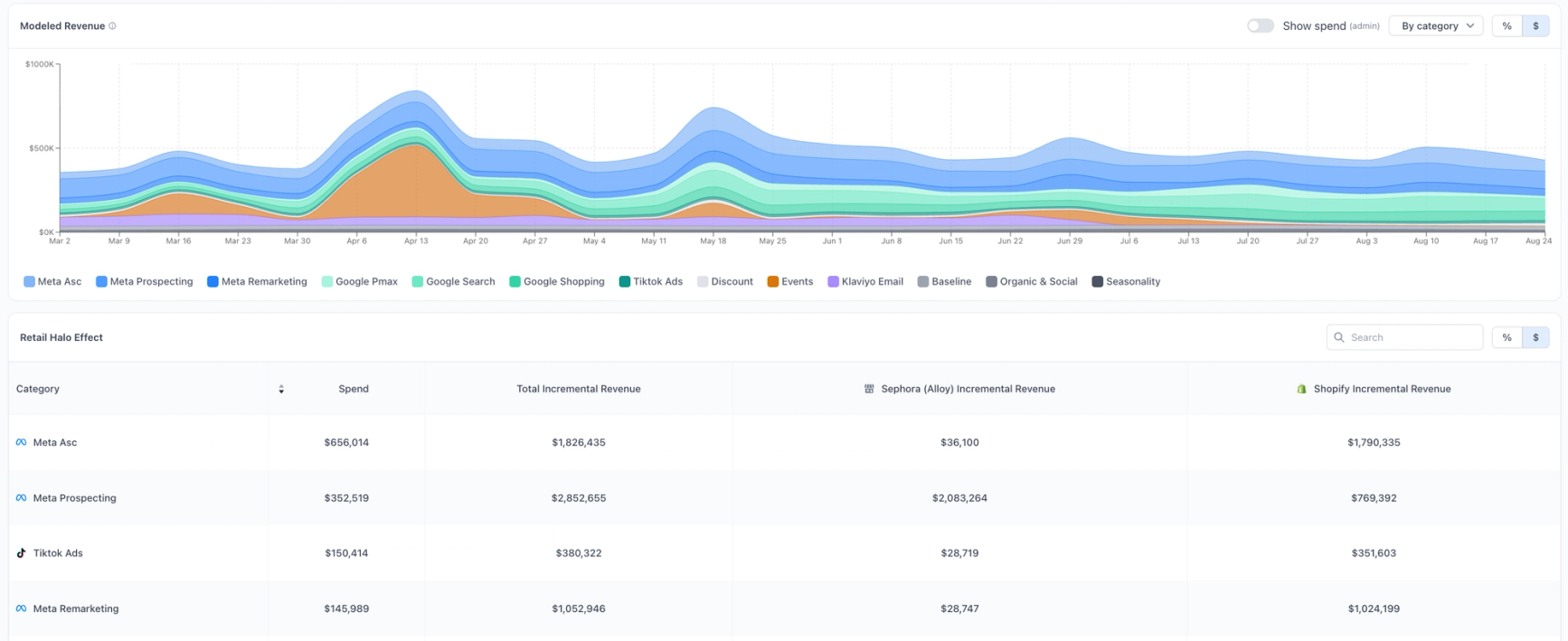
Marketing mix modeling (MMM) in Compass now incorporates connected online and offline retail sales to estimate channel contribution, giving teams a more complete view of how marketing influences growth.
See Tapcart mobile app performance
Your mobile app can be a powerful growth channel, but its performance is often buried in website data, making it harder to understand what the app actually drives.
Triple Whale’s new Tapcart integration gives app sessions, visitors, and add-to-carts their own view alongside website performance, revealing deeper context to your app’s role in the customer journey and growth.
Merchandise what’s actually converting on ads
Your ad spend tells you what’s working, but your merchandising rules often don’t know it. Triple Whale now connects performance data to Kimonix, helping you identify profitable products and automatically feature them across collections and campaigns.
More updates making a splash 💦
Chat with Moby from Summary and Attribution
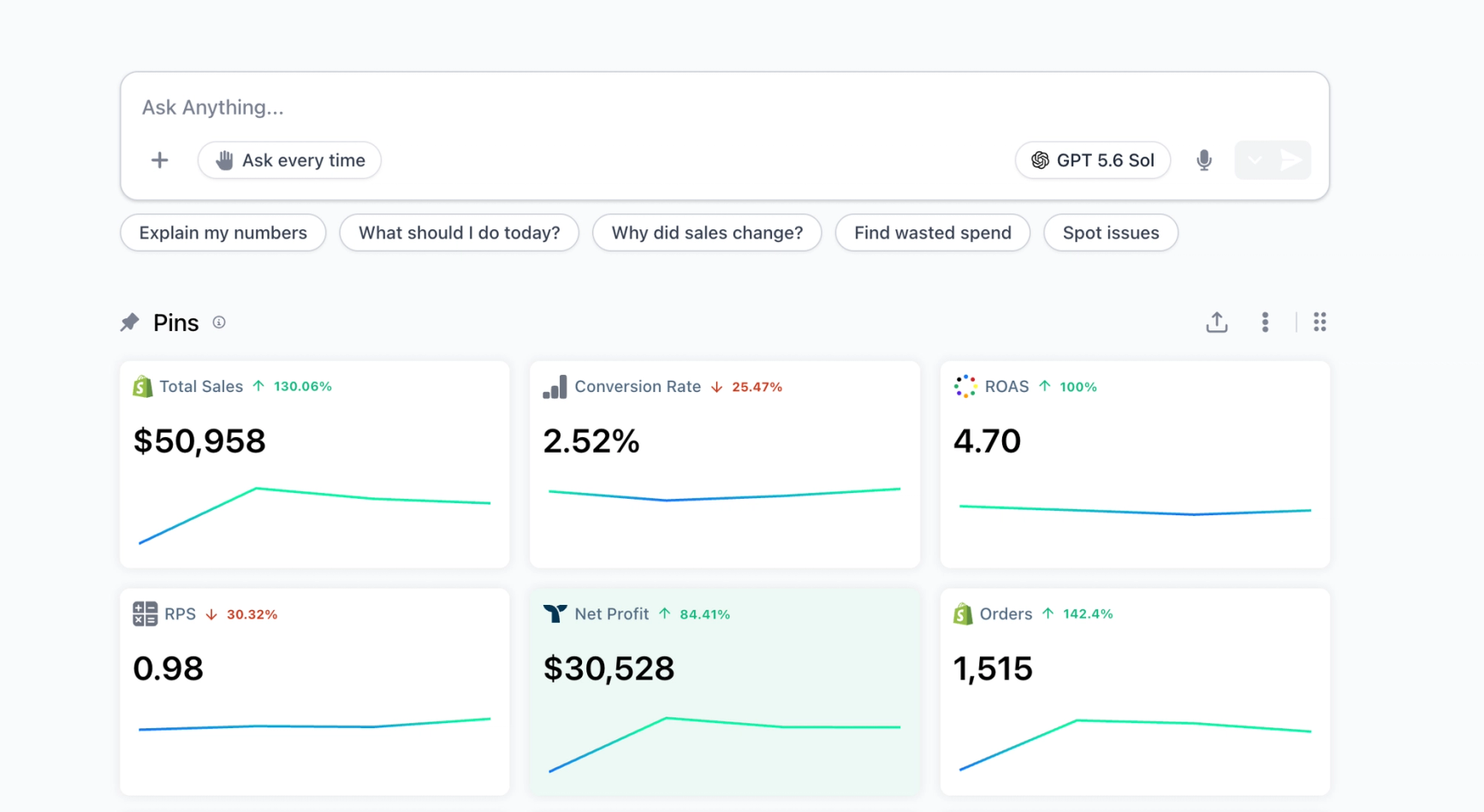
When performance changes, the next question is why. Now you can chat with Moby directly from Summary and Attribution to investigate shifts, uncover opportunities, and take action without leaving your analysis.
Make bigger budget decisions with better evidence
Available in Compass
Changing marketing spend is a big decision. Compass now gives teams stronger evidence at the moments that matter: before changing spend, when understanding where incremental revenue is coming from, or when deciding whether an insight is strong enough to act on:
- Test a new level of spend: Run scale-up and scale-down tests to measure incremental impact at different levels of spend and see how returns change as investment shifts. Available in Beta. Try scale-up and scale-down testing →
- Model what matters to your business: Break out MMM results by customer type, retailer, or other dimensions for a more precise view of where marketing is driving growth. Explore MMM →
- See the evidence behind Compass recommendations: Know why Compass is recommending a change without manually reconciling attribution, MMM, and incrementality. Discover evidence links →
Improve ad performance with better signals
Available with Sonar Optimize
Knowing where to invest is only part of the equation. Ad platforms need better signals to understand who to target and which conversions actually matter. Sonar Optimize provides a more complete view of customers, conversions, and its business value, helping algorithms better optimize performance.
- Improve Snapchat optimization: Teams can now give Snapchat a more complete view of customers and conversions, with improved visibility and attribution signals that address performance gaps and inform its purpose-built optimization models. Set up Sonar for Snapchat →
- Optimize Meta toward profit: Sonar Optimize can send profit data to give Meta a clearer signal of which conversions are most profitable, so it can optimize toward higher-margin sales. Explore profit optimization →
- Support for multi-pixel setups: Send signals across multiple Meta pixels, making it easier to support businesses operating across more complex setups. Available by request only.
That’s a wrap on September’s What’s New in Triple Whale. These updates bring more of your business into one connected platform, helping your team understand performance, validate investments, improve ad optimization, and act faster.
Because the more connected your data is, the more confidently your team can grow.
Already a Triple Whale customer? Explore what’s new and reach out to your CSM to see what’s available with your plan.
Not on Triple Whale yet? Book a demo to see what it looks like to run more of your business from the AI operating system for ecommerce.